Blog Archive

This blog was previously hosted at photoradarscam.wordpress.com. That service has been discontinued, so the full archive of 130 posts (2008–2016) has been preserved here for reference, with images saved locally. A couple of images originally embedded from a third-party blog are still linked from their original source and may not load.

2016 (2 posts)

ATS Issues Press Release To Explain Why Their Products Don't Work

ATS, one of the nations leading provider of automated ticketing machines recently issued a press release explaining why their cameras can have no effect on most accidents. The press release explains that 58% of red light runners were distracted (including cell phone use, looking away, eyes closed, smoking, eating/drinking, reading, and applying make-up) while running a red light. If distracted drivers didn't notice the red light, they certainly had no awareness of the camera and thus were not deterred from committing the violation. This press release is a blatant admission that cameras cannot do do anything to deter or prevent a majority of red light camera violations.

ATS sampled data from 67 intersections with red-light safety cameras across the United States over a three-month period. Distractions were coded into several categories, including cell phone use, looking away, eyes closed, smoking, eating/drinking, reading, and applying make-up. ATS data showed distracted red-light running increased by 58% from 2012 to 2015.


Dawson: Exhausting, smug photo radar debate carries on

Tyler Dawson of the Ottawa Citizen wrote this brilliant piece on the photo radar debate. Reprinted here without permission:

The smarm and smugness that have accompanied the debate over whether Ottawa should get photo radar are indicative of the exhausting way arguments are conducted. This manifests itself, particularly, in the suggestions that people who don’t want photo radar are speed-crazed sociopaths and, from the other side of the debate, that photo radar itself is nothing more than a cash grab.

It’s literally true that photo radar is a cash grab; it would likely become a significant revenue source for the city. So there’s that. And some photo radar proponents likely are juice-swilling cyclists taking up lane space. But it’s also true that some people who don’t want photo radar really do drive like Vin Diesel wannabes and would prefer they remain able to get away with it.

None of these points, on their own, makes the case for or against photo radar or does much to discredit the other side, but they do reduce what’s actually a serious public policy debate to stupid quips. That will no doubt continue, even after last Wednesday’s transportation committee vote that referred a pilot project on photo radar to city council.

I, for one, rarely speed. I simply can’t afford the tickets – or worse, increased insurance premiums. So I’m not one of the aforementioned sociopaths and have no particular desire to drive like a showboating teenager. But I don’t like photo radar either; Edmonton went through a fantastically expensive process of getting it under city control and there’s been a long-running controversy over whether or not the city is lowering trigger limits on radar machines to reap more cash.

More to the point, the case hasn’t actually been made that Ottawa needs photo radar. There were 29 fatalities in 2014 on city streets; in Edmonton that year, where photo radar raised $34.5 million, there were 23. The transportation committee heard some profoundly weird arguments in favour of photo radar: for instance, according to the Citizen’s Matthew Pearson, that speeders are privatizing public space for their own convenience. This is obscurantist mumbo jumbo. And a petition in support of photo radar, showing 800 signatures – that’s well less than one per cent of Ottawa’s population.

The issue is whether or not city streets are dangerous. Are they? Is speeding the issue? Is photo radar the only conceivable way – or legitimately the last-ditch effort after all else has been tried – to tackle these problems?

Rightly, the city is looking only at a pilot project for now, and Mayor Jim Watson, backing down on his opposition, says he’ll accept it only in a school zone and only if the money raised goes to road safety. (Why has he changed his tune?)

“I believe this is a solid way forward for those who are hesitant about a widescale roll-out of photo radar on streets where it may not be warranted or for those who are concerned with the tool being used as a limitless revenue generating measure,” he said in a statement.

But does anybody seriously think that at the end of a pilot project, with the potential to raise revenue – and perhaps slow down drivers – photo radar is going to be abandoned by council?

Yasir Naqvi, an Ottawa MPP and the Ontario community safety minister, called Wednesday’s vote on photo radar a “bold step.” Politicians, ever eager to be seen to keep children safe, raise revenue without blowback and punish intransigence, are not likely to stand up to photo radar.

Ottawans should reserve the right to be suspicious of motives and what’ll happen if we get photo radar. There’s nothing wrong with worrying about this, or with wondering, as traffic fatalities continue to decline provincially, if we really need new enforcement technology or indeed more law enforcement presence in our lives.

Whatever the outcome of the debate and pilot project, an approach that tries to score cheap points over having a serious discussion damages public policy. And that’s no good for anyone.

Back to top

2015 (7 posts)

EVERYTHING YOU NEED TO KNOW ABOUT IGNORING RED-LIGHT CAMERA TICKETS

A great article worth re-posting about red light camera tickets in LA:

EVERYTHING YOU NEED TO KNOW ABOUT IGNORING RED-LIGHT CAMERA TICKETS

So, cutting right to the chase: You can still ignore them with little consequence, experts say. And, no, a recent California Supreme Court red-light camera ruling in People v. Goldsmith does not change that, our sources say.

Arizona SB1167 Seeks to Ban Photo Enforcement in Arizona

Senators Ward, Burges, Kavanah, and Yee have sponsored Senate Bill SB1167 for the 2015 Arizona legislative session. This bill will ban all forms of photo enforcement in Arizona. Please contact your legislators and let them know how they should vote on this bill that will help remove the corruption from law enforcement and improve traffic safety for all motorists.

Public conned over anti-speeding strategy

Saw a great editorial with some strong arguments against the "speed kills" fallacy. Here are some excerpts and here is the full article.

“When the road toll goes down, the police claim credit. When it goes up, they blame bad driving. They can’t have it both ways. Either the police anti-speeding strategy works or it doesn’t work.”

“The police anti-speeding strategy is based on a discredited theory that if you ticket mums and dads who drift over the speed limit, then criminals will stop driving recklessly. This claim is simply not based on any credible science.”

“The facts are these: only about 20% of fatalities occur above the legal speed limit."

"Of these 20% of fatalities that occur above the speed limit, most involve either drunks, motorcyclists or young working-class males who live on the edge of the law. There is simply no evidence that rigid enforcement of speed limits has made the slightest difference to the behavior of these high risk drivers.”

Engineering Improves Safety at Red Light Camera Intersections

Here's a great article that explains what happens when a city extends yellow light times. Violations PLUNGE!

The study result means that most of those who received tickets for entering the intersection within the difference time in the chart above after the light changed to red were ticketed unfairly. This is huge. We are talking thousands of unfair tickets and several million dollars in unfair fines at $490 per violation.

Since my involvement with this, I have had contact with some who have received tickets and have had a personal experience as well. They include:

* A lady with a family that recently moved to our city. She was trapped at the intersection of Magic Mountain Parkway at McBean Parkway. What a great welcome to our city.

* A good friend whose parents were visiting from Arizona last Christmas. On their way out of town at 3:49 a.m. the day after Christmas, they were trapped at the intersection of Orchard Village south at Lyons Avenue. The picture on the violation indicates they were clearly victims of the unfair timing. What a great Christmas gift from our city. They are elderly and just paid the fine.

* My father-in-law, who three years ago received a ticket when he was three days dead. No, it was not another miraculous resurrection. His son from Albany was driving the car while in town for the funeral. This could have been fought, but my distraught mother-in-law insisted on paying it because “she just did not want any trouble in the future.”

What the Red Light Camera Companies Don't Want You To Know

[youtube https://www.youtube.com/watch?v=VAKXCTPE-nI&w=854&h=510]

Chicago Red Light Camera Report

This is a great study that analyzed the Chicago camera program and has shown again that (surprise!) crashes INCREASED after installing red light cameras!

Chicago Red Light Camera Study

Another Crash Caused by Speed Camera

Crashes caused by speed cameras are always tough to document and prove, but alas we have a video of yet another crash CAUSED by speed camera:

Crash Caused by Speed Camera

Back to top

2014 (5 posts)

Red Light Cameras, Drones and Surveillance: Fleecing the Taxpayer in the Age of Petty Tyrannies

Another great editorial about cameras, re-posted here without permission from Canada Free Press:

We labor today under the weight of countless tyrannies, large and small, carried out in the name of the national good by an elite class of government officials who are largely insulated from the ill effects of their actions. We, the middling classes, are not so fortunate. We find ourselves badgered, bullied and browbeaten into bearing the brunt of their arrogance, paying the price for their greed, suffering the backlash for their militarism, agonizing as a result of their inaction, feigning ignorance about their backroom dealings, overlooking their incompetence, turning a blind eye to their misdeeds, cowering from their heavy-handed tactics, and blindly hoping for change that never comes.

As I point out in my book, A Government of Wolves: The Emerging American Police State, the overt signs of the despotism exercised by the increasingly authoritarian regime that passes itself off as the United States government are all around us: warrant-less surveillance of Americans’ private phone and email conversations by the NSA; SWAT team raids of Americans’ homes; shootings of unarmed citizens by police; harsh punishments meted out to schoolchildren in the name of zero tolerance; drones taking to the skies domestically; endless wars; out-of-control spending; militarized police; roadside strip searches; roving TSA sweeps; privatized prisons with a profit incentive for jailing Americans; fusion centers that collect and disseminate data on Americans’ private transactions; and militarized agencies with stockpiles of ammunition, to name some of the most appalling.

Yet as egregious as these incursions on our rights may be, it’s the endless, petty tyrannies inflicted on an overtaxed, overregulated, and underrepresented populace that occasionally nudge a weary public out of their numb indifference and into a state of outrage. Consider, for example, that federal and state governments now require on penalty of a fine that individuals apply for permission before they can grow exotic orchids, host elaborate dinner parties, gather friends in one’s home for Bible studies, give coffee to the homeless, or keep chickens as pets.


Consider, too, the red light camera schemes that have been popping up all over the country. These traffic cameras, little more than intrusive, money-making scams for states, have been shown to do little to increase safety while actually contributing to more accidents. Nevertheless, they are being inflicted on unsuspecting drivers by revenue-hungry municipalities, despite revelations of corruption, collusion and fraud.

In most cases, state and local governments arrange to lease the cameras from a corporation such as Redflex, which takes its cut of ticket revenue first, with the excess going to the states and municipalities. The cameras, which are triggered by sensors buried in the road, work by taking photos of drivers who enter intersections after a traffic light turns red. What few realize, however, is that you don’t actually have to run a red light to get “caught.” Many drivers have triggered the cameras simply by making a right turn on red or crossing the sensor but not advancing into the intersection.

Indeed, these intricate red light camera systems—which also function as surveillance cameras—placed in cities and towns throughout America, ostensibly for our own good, are in reality simply another means for government and corporate officials to fleece the American people. Virginia is a perfect example of what happens when politicians sacrifice safety to generate revenue. In March 2010, Governor Bob McDonnell approved legislation that allows private corporations operating the red light camera systems, such as the Australian-based Redflex, to directly access motorists’ confidential information from the Department of Motor Vehicles. What this means is that not only will government agents have one more means of monitoring a person’s whereabouts, but a remote, privately-owned corporation will now have access to drivers’ confidential information.

Another provision signed into law by McDonnell also shortened the amount of time given to alleged traffic law violators to respond to citations resulting from red light camera violations. While prior law allotted 60 days for the response, the amendment cut that time in half to 30 days. This gives the driver scant time to receive and review the information, determine what action is required, inspect the evidence, consider appealing the citation and respond appropriately. In this way, by shortening the appeal time, more drivers are forced to pay the fine or face added penalties.

For red light camera manufacturers such as Redflex, there’s a lot of money to be made from these “traffic safety” fines. Redflex, which has installed and operates over 2,000 red light camera programs in 220 localities across the United States and Canada, made $25 million in 2008. In addition to revenue from fines, Redflex also gets paid for installing the red light cameras, which cost $25,000 a pop, plus $13,800 per year for maintenance.

Although these cameras are in use all across America, Chicago boasts the “largest enforcement program in the world.” Since installing Chicago’s 384 red light cameras in 2003, Redflex has made $97 million from residents of the Windy City, while the city has profited to the tune of over $300 million. Hoping to pull in an additional $30 million for the year 2013, Mayor Rahm Emanuel began negotiating a new contract last year with Redflex to install speed cameras. However, contract negotiations for the speed cameras were terminated shortly after it was revealed that Chicago city officials had been on the receiving end of millions of dollars in financial bribes from Redflex. Chicago is now in the process of terminating its contract with Redflex, despite seeming attempts by Mayor Emanuel’s office to delay the process.

Redflex’s use of graft and chicanery in Chicago in order to pull in greater profits seems to be the rule rather than the exception when it comes to the company’s overall business practices. For example, in Center Point, Alabama, a red light camera program (again operated by Redflex) saw motorists being issued fines under the pretext that their tickets could be appealed and their cases heard in court. Unfortunately, since no such court exists, those targeted with citations were compelled to pay the fine. They are now pursuing a class-action lawsuit against the city and Redflex.

One particularly corrupt practice aimed at increasing the incidence of red light violations (and fines) involves the shortening of yellow lights in intersections with red light cameras, despite the fact that reports show that lengthening the yellow lights serves to minimize accidents. According to the U.S. Department of Transportation, “a one second increase in yellow time results in 40 percent decrease in severe red light crashes.”

Indeed, those who claim to champion the use of red light cameras in the name of traffic safety are loath to consider reducing the length of yellow lights if it means losing significant citation revenue. An investigative report by a Tampa Bay news station revealed that in 2011, Florida officials conspired to reduce the length of yellow lights at key intersections below minimum federal recommendations in order to issue more citations and collect more fines via red light camera. By reducing the length of yellow lights by a mere half-second, Florida officials doubled the number of citations issued. Contrast that with what happened when the yellow light time was increased from 3 seconds to the minimum requirement of 4.3 seconds at one Florida intersection: traffic citations dropped by 90 percent.

If you want to know the real motives behind any government program, follow the money trail. Florida is a perfect example. In 2012 alone, Florida pulled in about $100 million from red light cameras operating in 70 communities. About half the profits went into state coffers, while the other half was split between counties, cities and the corporation which manufactures the cameras. Officials are anticipating increased profits of $120 million for 2013. Following the trail beyond the local governments working with Redflex to inflict these cameras on drivers, and you’ll find millions of dollars in campaign funds flowing to Florida politicians from lobbyists for the red light camera industry.

Fortunately, the resistance against these programs is gaining traction, with localities across the United States cancelling their red-light camera programs in droves. In early May 2013, officials in Phoenix, Arizona backpedaled on a one-year extension of their contract with Redflex, with the city’s chief financial officer, Jeff Dewitt saying, “We made a mistake.” Voters in League City, Texas became the fifth city in the state to vote to end red light camera enforcement, ending another of Redflex’s contracts in the United States. Cities in Florida, Arizona, and California have terminated contract negotiations with the company, and in March 2013, a parish in Louisiana voted to refund nearly $20 million in revenue from red-light cameras after yet another corruption scandal came to light. Florida state legislators are also considering banning all red light cameras in the state.

What’s the lesson here? Whether you’re talking about combating red light cameras, banning the use of weaponized surveillance drones domestically, putting an end to warrant-less spying, or reining in government overspending, if you really want to enact change, don’t waste your time working at the national level, where graft and corruption are entrenched. The place to foment change, institute true reforms, and resist government overreach is at the local level. That’s what federalism in early America was all about—government from the bottom up—a loose collective of local governments with power invested in the populace, reflecting their will to those operating at the national level. Remarking on the benefits of the American tradition of local self-government in the 1830s, the French historian Alexis de Tocqueville observed:

Local institutions are to liberty what primary schools are to science; they put it within the people’s reach; they teach people to appreciate its peaceful enjoyment and accustom them to make use of it. Without local institutions a nation may give itself a free government, but it has not got the spirit of liberty.

To put it another way, if we are to have any hope of reclaiming our run-away government and restoring our freedoms, change will have to start at the local level and trickle upwards. There is no other way.

Speed Limit Fixation

Governments and municipalities have fallen in love with the easy revenue that automated ticketing machines can provide. But as with anything, there is a trade off. Do we really want drivers fixated on their speedometers and focused on noticing every speed limit sign they pass? This article from TheNewspaper.com discusses this subject:

In jurisdictions with automated speed enforcement, cruise control can save drivers from receiving a nasty surprise in the mail. A study released July 30 from the Vinci Autoroutes Foundation concluded that this reliance on cruise control can actually make driving more dangerous.

Researchers at the University of Strasbourg's Centre d'Investigations Neurocognitives et Neurophysiologiques placed a group of 90 test subjects in a driving simulator. The individuals were split into young, middle age, and elderly groups with an equal number of men and women. Each performed a series of tests along a 75 mile simulated highway drive. The tests were repeated in different sessions with no electronic aids, with cruise control and with a speed limiter.

Data from the experiment show that drivers using cruise control tended to stay in the fast line too long when overtaking slower cars. They would also ride between five and ten percent closer to the bumpers of vehicles before and after making a pass. When using a speed control devices, the driver moves the steering wheel less often, but the steering corrections tended to be about one-third sharper when using cruise control. Reaction times decreased by one second, adding 25 feet to the braking distance at 80 MPH.

The test used a subjective measure of drowsiness called the Karolinska Sleepiness Scale and an objective electroencephalogram to determine that younger drivers had significantly reduced attentiveness when using cruise control. After an hour of driving with cruise control, the onset of drowsiness was 25 percent more likely.

"More generally, this study shows the need for the driver to master the use of driving aids, which may, by automating control of the vehicle, deprive the driver of part of his or her attention and control capacity," the study's author, Professor Andre Dufour, said. "The driver must remain in control of the vehicle and responsible for his or her driving under all circumstances."

These findings are consistent with those of the late Paul Smith, founder of the Safe Speed road safety campaign, who calculated that each time a driver looked down to check his speedometer in a 200 yard speed camera zone -- each glance takes about 1.1 seconds -- he loses 13 percent of the time available to observe the road for hazards. The UK Department for Transport lists driver inattention as the cause of 25 percent of accidents.

"We believe that speed limiters that 'know' the speed limit are probably the most dangerous idea around in modern road safety," Smith had written. "Such limiters take no account of the mechanisms by which accidents are avoided, and the net effect of wide installation would be extremely dangerous. We'd have a nation of... zombie drivers."

Speed? Let the people decide

Fantastic article that explores the point we always make here: If safety is so important and speed is so dangerous, why not lower all limits to 20? Reprinted here without permission from OnlineOpinion.com.au:

Did you cop a speeding ticket these holidays? Many did. Speed limits have the status of holy writ, with everyone expected to obey them. Officially, fines are atonement for sinning.

We are repeatedly told how many people were killed in road accidents over the holiday season, invariably attributed to excess speed. There are gory advertisements warning of lifelong injuries, with big brother enforcement via fixed and hidden cameras, double demerits, average speed cameras, aerial monitoring and highway patrols.

The underlying message never varies – below the speed limit is safe, above the limit is not.

The public thinks otherwise. In the absence of visible enforcement or perceived hazards, voluntary compliance with speed limits is low. A 2009 survey found less than 20% of drivers admit to always driving at or under the speed limit. Another found only 41% thought speeding by up to 10 km/h in a 100 km/h zone was unacceptable, while 38% admitted to speeding by 10-19 km/h and 21% by 20 km/h or more.

Outside narrow suburban streets, exceeding the speed limit is not seen as a problem.

The National Road Safety Strategy seeks to change that. Its aim is to "reduce poor road user behaviour" through "behavioural change", and has a vision that "no person should be killed or seriously injured on Australia's roads."

It asserts we need lower speed limits, additional enforcement including in-car speed monitoring, plus increased penalties.

There is a link between speed and the risk of accidents and injuries. The degree of correlation is disputed and there is some evidence that modestly higher speed limits would reduce the accident rate, but higher speeds certainly lead to more serious accidents and ultimately more of them.

The question is, why not drastically lower speed limits? Given the aim of zero deaths and injuries, why not reduce the speed limit to something like 20 km/h so that accidents are either eliminated or only have minor consequences?

The answer, fairly obviously, is that it would be unacceptable to the community. There is an implicit assumption in speed limits that there will be a certain level of deaths and serious injuries as the price paid for convenient travel. The vision of the National Road Safety Strategy is not only unobtainable, but irrational.

That raises an interesting question. When the law says one thing and most people have a different view, which should prevail? And perhaps more to the point, who should set the speed limits?

The people who currently set them are anonymous, unaccountable bureaucrats. Perhaps the most powerful people in Australia, they essentially decide how many people should die on our roads. Governments and ministers come and go, but they and their speed limits are always there.

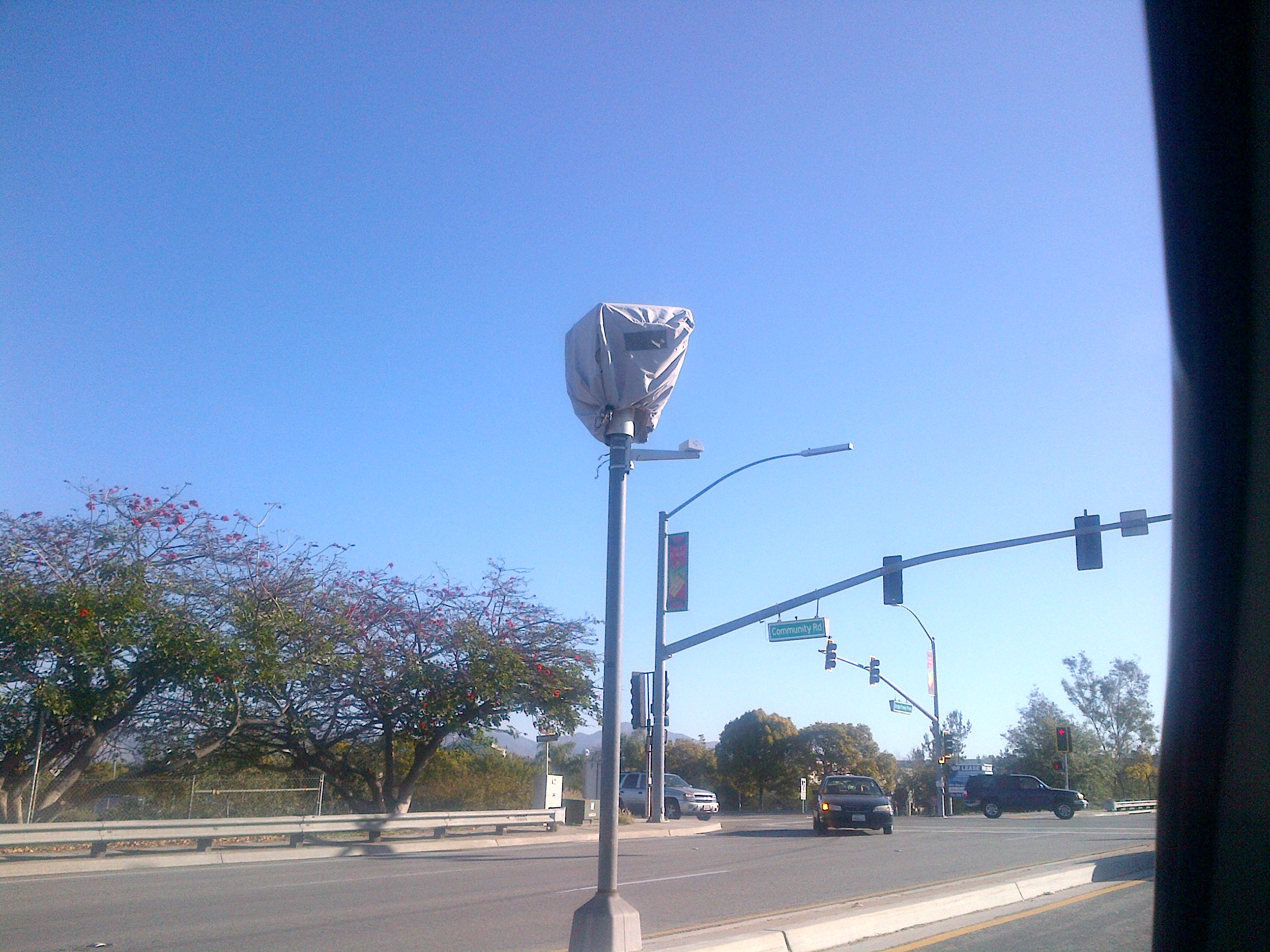
Poway Red Light Cameras Still Up

As of Jan 10, 2014, Poway's red light cameras are still up, despite a statement from Redflex representative saying they will be removed 30 days from the date of the council's vote to remove the cameras, according to this article from Oct 15, 2013,

The Poway City Council Tuesday night unanimously voted to end its contract with Redflex Traffic Systems immediately. Its representative said the cameras will be removed within 30 days after the company is notified in writing of the decision.

The vote to remove the cameras came after a 6 month period where the cameras were shut off and crashes declined compared to the 6 months prior with the cameras turned on.

Is this more incompetence by Redflex, or some sneaky attempt to weasel back into a new contract?

Poway_Camera RLC at Scripps Pkwy & Community, Jan 10, 2014.


More Evidence: Red Light Cameras Increase Crashes

It's bit old but worth mentioning. This article from TheNewspaper.com discusses a study that reveals what we already know: Red Light Cameras increase crashes! This report dives into why data and reports have differing conclusions:

The studies with the most complete set of variables concluded that accidents increased with the use of red light cameras, while the reports that claimed an accident reduction benefit to camera use relied on more simplistic analyses that excluded factors such as yellow signal timing, the number of lanes at an intersection and time trends.

Back to top

2013 (4 posts)

Speed Camera Van Fails To Prevent Another Crash in Tucson

ABC15 News is reporting yet another failure of photo enforcement to protect itself from being crashed into.

TUCSON, AZ - A man is in custody in Tucson after allegedly crashing his car into a parked photo radar van.

Tucson police say 25-year-old Matthew Jones is being held on suspicion of felony criminal damage and driving under the influence.

He was arrested after the New Year's Day accident in the midtown area.

Police say Jones' vehicle veered off the road and struck the radar van.


Just another example of the ineffectiveness of photo enforcement.

Why you should care about red-light cameras

Sorry about the lack of posts lately. The website if pretty much up to date with all recent stories.
I've decided to re-print this opinion piece as it is really well written by Assemblyman Declan O’Scanlon. The original post can be found here.

Why you should care about red-light cameras: Opinion

More people approach me regarding the red-light camera issue than any other. Despite that level of passion — virtually all of it appropriately against the devices — there are still folks who say, “This is a minor issue,” or “Just don’t run red lights and you have nothing to worry about.” Those people are wrong on both counts.

Let’s agree that it wouldn’t be fair, or safe, to do away with yellow lights altogether, with lights changing from green directly to red. By the same token, yellow lights that simply flashed for a split second wouldn’t be fair or serve their purpose, to permit people who are too close to the intersection to stop, to have enough time to travel through safely.

So we must conclude that yellow lights should be of an appropriate and fair duration. Problem is, they invariably aren’t appropriate or fair at intersections with red-light camera. The lights are designed to entrap and fine reasonably behaving, law-abiding motorists.

Red-light cameras don’t improve safety. We know this from decades of data collected throughout the United States and Europe. If you watch videos of people causing major accidents at intersections, almost none are caused by scofflaws who blindly run red lights — they are you or me on a bad day, after a fight with our spouse or a screaming kid in the back seat, or worried about our jobs. If the prospect of death isn’t enough to stop someone from absentmindedly driving through a red light, then an $85 or $140 — or $5,000 _ fine isn’t going to, either.

Additionally, if you increase yellow light times at these supposedly hazardous intersections — as has been done with uniformly successful results in other states and municipalities — you reduce red-light running more dramatically than cameras do.

Given those facts, it is unquestionable that the devices are all about raising money. And here is why everyone should care about this issue. If we let our government pick our pockets with irrational policies and laws that aren’t based on any sound engineering or facts, just think of the Pandora’s Box that opens. How about 15 mph speed limits on every stretch of every road? How about a blanket prohibition on left turns? How about traffic lights in the middle of every block — or heck, every 100 feet — with cameras, of course. Would that be ridiculously arbitrary and outrageous? You bet. But it is simply taking the red-light camera program to its logical (or illogical) extreme. If we don’t demand our government behave in a reasonable, rational way taking into account the laws we can’t change, like those of physics, then we open ourselves up to government-designed and -sanctioned anarchy and oppression.

Unless red-light camera intersections are set up to entrap motorists with short yellow lights, there aren’t enough red-light runners to pay for the devices. Short yellow lights make intersections more dangerous, too. So in the name of ill-gotten revenue, we are actually sacrificing safety. The companies that sell red-light cameras know this. The officials presiding over and advocating for these insidious devices should, too. The camera companies are more than happy to sacrifice the health, welfare and lives of motorists to keep the hundreds of millions of dollars flowing out of our pockets and into theirs. Some of that money is “invested” into the campaign coffers of passively corrupt elected officials — who then vote to keep the gravy train rolling, best interests of New Jersey residents be damned. It’s disgusting. And if we continue to permit them to so blatantly take advantage of us, we will only have ourselves to thank for their next attempts at picking our pockets — and endangering our families.

Assemblyman Declan O’Scanlon (R-Monmouth) of Little Silver represents the 13th Legislative District.

Take a hard look when considering red-light cameras

Fantastic article by Kenneth F. Warren in the St. Louis Post-Dispatch. Re-posted here without permission:

Take a hard look when considering red-light cameras

Make no mistake, red-light camera companies such as Redflex and American Traffic Solutions are private businesses out to maximize their profits, not necessarily to promote public safety. These companies spend millions of dollars paying PR firms, lawyers and lobbyists to promote the use of their cameras They are responsible for planting stories in the media, often using prominent public or former public officials to distort the truth about the effectiveness of red-light cameras.

The reality is that the red-light camera companies now face a very uncertain financial future, not only because red-light camera use is facing all sorts of legitimate legal challenges, but because an increasing number of rigorous, independent studies cast serious doubt on their effectiveness. For example, University of South Florida public health researchers, examining independent red-light camera studies, concluded: “Rather than improving motorist safety, red-light cameras significantly increase crashes.” Barbara Langland-Orban, the lead researcher, summarized her research, noting: “The rigorous studies clearly show red-light cameras don’t work.” I concur.

Large and small cities such as Houston, Los Angeles, Albuquerque, and Fort Collins, Colo., among others, have stopped using red-light cameras because they have become disenchanted with their ineffectiveness. Fort Collins ditched its red-light camera program when intersection accidents increased by 83 percent after red-light cameras were installed. Addicted to the red-light camera “cash cow,” Los Angeles city officials initially claimed their red-light cameras reduced traffic accidents, but a study by KCAL-TV found that 20 of 32 LA intersections with red-light cameras experienced an increase in accidents with triple the accident rate at several intersections.

Exposed, the Los Angeles City Council in 2012 voted 13-0 to cancel its red-light camera program after their Police Commission acknowledged an audit that disclosed that the red-light cameras failed to enhance safety and that about two-thirds of the $480 citations plus fees were issued for simply rolling right turns. Reflecting upon LA’s red-light camera program, Councilman Dennis Cine confessed: “It was completely wrong. It was strictly designed to bring in revenue and didn’t do anything for public safety.”

In dumping their red-light cameras, Hayward, Calif., Police Chief Diane Urban said: “Rear-end accidents increase significantly because people come to a screeching halt. There’s no proven correlation between red-light camera systems and consistently decreasing crashes.”

Locally, communities have been canceling their red-light camera contracts, while other communities throughout the state have suspended their use in light of three recent court decisions questioning their legality. For example, in 2011 the Washington, Mo., City Council voted 6-2 to drop its red-light camera program because its three-year experience with ATS’s red-light cameras proved ineffective. In an interview with Washington Police Chief Ken Hahn, he told me that ATS’s people were great to work with, but their cameras simply did not work to reduce traffic accidents. In 2011, Jefferson County backed out of a pending contract with ATS, while Brentwood did not renew its contract with ATS last April because new council members were skeptical toward the red-light camera system.

Traffic engineers have found that one reason red-light cameras are not effective is because intersection accidents are mostly caused by unintentional red-light running, often occurring several seconds after the light turns red, not by intentional red-light running within a fraction of a second of the light turning red when normally cars with the green light have not yet entered the intersection. Red-light cameras are simply not very effective against these “distracted” drivers who unintentionally run red lights, causing very dangerous “T-bone” crashes. Traffic engineers claim that simply lengthening the yellow light time a little and keeping all lights red for a second or so, allowing the intersection to clear, work more effectively to reduce intersection accidents than red-light cameras.

Chicago’s Mayor Rahm Emanuel says he plans to balance his 2014 budget with $120 million in red-light camera/speed camera fines. But it seems immoral for public officials to support a red-light camera program just because these cameras have the potential to generate vast revenues for their cities. Public officials have a sworn obligation to protect the public by promoting public safety. As U.S. PIRG asserts, public officials, when considering red-light camera programs, should “put public safety first in decisions regarding enforcement of traffic laws and this includes evaluating privatized law enforcement camera systems against alternative safety options without regard to potential revenues.”

Despite Emanuel, many public officials have become aware of the cost-ineffectiveness of red-light cameras. In 2011 almost 700 communities nationwide used red-light cameras, but today only about 500 communities do.

Kenneth F. Warren is a professor of political science and public policy at St. Louis University. He received a Beaumont Award this year to study red-light cameras in the U.S., Britain and China

Errors and suspicion cloud operation of speed cameras

Another great editorial, republished without permission from DelmarvaNow.com:

Speed cameras were controversial from the time they were first installed in school zones in the Salisbury area. Some people object to the devices on an ideological basis; others just resent being cited unjustly.

Some of the complaints and criticisms are well-deserved. The cameras are neither foolproof nor perfect. People sometimes get tickets when they weren’t speeding. Sometimes vehicle owners get citations in the mail when someone else was driving. Since there is no “accuser” to face in court, some say the cameras are unconstitutional.

The Maryland Drivers Alliance, which opposes speed cameras in the state, also claims state officials were unable to provide proof and documentation that the devices are kept in good working order at all times, calibrated for the appropriate speed and accurate. Louis Wilen, a spokesman, said a lot of tickets were issued that should not have been.

In Wicomico County, the cameras may only be used in “school zones” where students cross streets in heavy numbers at the beginning and end of each school day. Critics charge that the cameras should, therefore, be turned off when school is not in session. They say the cameras are not about safety at all, but rather serve as a revenue stream for local government.

Salisbury-area residents cite instances when they were issued a citation while their vehicle was parked or in traffic but not moving. And there are ways around getting photographed — reflective coatings on license plates, for example.

In an ideal world, we would have officers stationed at every school at the opening and closing of each school day.

We don’t live in an ideal world.

Law enforcement leaders say since the cameras were installed, average speeds have decreased significantly in those areas. In that sense, the cameras have accomplished one goal. And money obtained through violations in those camera zones has been used to purchase equipment used by accident reconstruction experts, which is an appropriate and productive use of the money.

Perhaps roving cameras could be used to increase the odds of of getting caught without constant monitoring.

However, it seems certain that maintenance and calibration are key. People might grumble if they are caught legitimately, but no one should have to pay a fine for something they did not do.

Speed cameras are not a perfect way to keep speeds down near busy schools. But scrupulous attention to calibration and maintenance would go a long way toward better public acceptance.

Back to top

2012 (28 posts)

Article of the Year

I'm a little late in posting on this one, but I've got to say that this editorial by Patrick Boyle is one of the best articles I've read this year. The writer concisely and accurately assesses the reality of the speed camera implementation in Olney, traffic engineering considerations and principals, and calls out the charade of safety that officials are trying to sell to the public. Here are a few choice passages:

If you think speed cameras catch only reckless drivers, then this suburb that real estate agents pitch as “family friendly” must attract the most dangerous drivers in the Washington area, according to county police data.

It’s a wonder that the streets of Olney aren’t littered with human roadkill. But many of us who’ve been nabbed think the success of these cameras reveals something else: Some of our speed limits are dishonestly low, and some of the cameras are set up in a sneaky way that turns reasonable drivers into violators.

Most Americans speed; 89 percent, according to a survey this year by Allstate. That doesn’t mean they all drive too fast. Traffic engineers recognize that drivers gravitate toward speeds that most of them feel are safe regardless of speed limits, and that their collective judgment is credible. That’s why engineers suggest following the 85th percentile rule ... Montgomery County doesn’t use this guideline before putting up a speed camera.

State law restricts speed cameras to residential areas and school zones. Authorities pitched the cameras as a way to protect children and people trying to cross their own streets. Yet we commonly find the cameras on busy, four- and six-lane roads, in areas that are commercial or sparsely developed ... But the camera aims away from the houses; it catches people who fail to slow down for a bank.

No Bloodbath after Cameras Switched Off

The Northampton Chronicle & Echo provided more evidence today that shows speed cameras either do not have any effect on saving lives or make roads less safe. Almost a year after switching of speed cameras in Northamptonshire (UK), fatalities dropped from 24 to 19.

“It also gives some evidence that although speed has risen as a result of removing cameras, the consequence hasn’t been more serious accidents.”

This is also further evidence that higher speed does NOT equal more crashes or more severe crashes. The focus should be placed on engineering solutions, keeping all traffic moving at as close to the same speeds as possible, and more prominent causes of crashes such as distracted driving.

FAIL! Another City Rejects Redflex Red Light Cameras (Montgomery, TX)

Tonight the Montgomery City Council avoided a decade of grief and trouble and spared the lives of residents and visitors when they decided AGAINST a contract with red light camera vendor Redflex.

Congratulations Montgomery!

Read more here!

Saint Pete Covers Timers to Boost Red Light Camera Revenue

This video reveals the true motive behind the Saint Pete Red Light Camera program. As always, they claim it's about safety but there is no reasonable explanation for covering the timers.

[youtube http://www.youtube.com/watch?v=O09oEq-eSbE&w=560&h=315]

New Report Shows Speed Cameras Worthless As Safety Tool

Yet another report shows that speed cameras server no safety purpose. The Luton News Herald & Post reports that a new report on speed cameras in Thames Valley yielded NO reduction in the number of collisions that resulted in death or injury.

The report concludes that:

> Speed cameras have not made any impact in preventing road traffic collisions.

> There was no reduction in the number of collisions at fixed (Gatso) camera sites after they were installed and there was no reduction in the number of collisions at mobile camera sites after they started operating.

> Even after compensating for other influences such as rising traffic volumes and safer vehicle design, the cameras are still not demonstrated to have resulted in any reduction in collision rates. In fact, collision rates increased at mobile speed camera sites following deployment relative to all roads in the Thames Valley area.

> There was found to be no relationship between vehicle speeds and the number of collisions. Reductions in speeds at camera sites (both average and above the speed limit) did not result in any reduction in the number of collisions.


Read more here.

Man Successfully Avoids Paying $13k in Photo Fines, Issues Guide

Last week The Advertiser featured an article about Mark Henderson of Lafayette, LA who intentionally racked up over $13,000 in photo ticket fines. He discovered that the tickets had no teeth, and he passes along his information for avoiding tickets. Unfortunately, this only applies to Lafayette, LA. Part or all of this may apply to your city or state's program, but you'll need to verify this with a lawyer or other professional:

1. A citation is mailed to you for either speeding or running a red light at one of the many intersections in Lafayette monitored by the devices

2. Simply don't pay the fine, and don't let the possible penalties on the ticket scare you. "There is no reason to think this is anything more than an empty threat to scare people into paying the tickets for their business," Henderson said.

3. Wait for Redflex to pass your personal information to an out-of-state collection agency that Henderson calls a "quasi law firm." Henderson ignored so many of the notices the firm sent him that he claims they altogether stopped trying to collect his debt.

4. Monitor your credit score closely and wait to see if the collection agency uses the citation debt to damage your score.

5. If your credit score is damaged, call one of the big three credit rating agencies, or perhaps even all three, to get in touch with someone who handles contract disputes.

6. Explain to the spokesperson that you never entered into a contractual agreement with either LCG or Redflex and that neither Redflex nor the collection agency had your permission to use your social security number (Henderson claims the SSNs are illegally taken from the DMV).

7. If you didn't give consent to use your SSN and didn't personally enter into a contract saying you would pay the fine, the damage to your credit score will be fixed "in a matter of 15 minutes," Henderson said.

Denver Police Conveniently Provide Incorrect Revenue Data to 9News

Several months ago 9News did a report on the infamous Denver Red Light Automated Ticketing Program. This program is particularly famous because the city issues photo tickets even if you stop at a red light! That's right, if a driver doesn't stop before a specific line on the pavement but they do stop before entering the intersection, they get a ticket. Regardless, as part of a report 9News discussed that the revenue from the program was not significant. It turns out months later that the data provided was monthly data, not yearly data, which is of course a much more substantial number.

Intentional, or mistake? You could place blame on 9News as well, but in the face of high profile programs ending in cities like LA, the city of Denver was probably desperate to spin revenue numbers in order to preserve this cash cow. We're not convinced this was an honest mistake, but you can be the judge.

[Video no longer available]

Arizona Senate Votes Today on Photo Enforcement Bills

Two bills are scheduled for a vote today in the Arizona Senate:

SCR1029 will put photo enforcement on the ballot this fall for Arizonans to vote whether or not they want to keep it.

SB1318 clarifies existing states that require photo enforcement employees who process violations to obtain private investigator's licenses. These employees have wide open access to personal information in government databases that otherwise require a government job or a PI license to access.

Call and write your senator to let them know to support both of these bills!

Senate Vote Results

The senate voted on two photo enforcement measures today and here are the results:

SCR1029 did not pass but it can be revived for another vote. We are 1 vote shy of giving Arizonans the right to decide whether or not they want to be policed by automated ticketing machines!

SB1318 passed 17-11 and is now headed to the house!

BOTH of these bills need YOUR support to pass! Contact your senators for SCR1029 and your senators AND representatives for both of these bills! TheNewspaper.com has a few more details.

New Orleans Forgives Photo Tickets Issued to City Employees

The Uptown Messenger is reporting that the city of New Orleans has announced that they are going to forgive tickets issued to city employees because "it would not be fair to go after city employees when the city had not laid out a clear policy."

That's right, NO believes that since employees didn't believe the laws applied to them, they are no longer responsible.

Of course, all of photo enforcement is a scam, but treating people differently based on employment sounds just plain unconstitutional.

Stop Sign Cameras Bring Millions in Revenue to LA Parks

The LA Weekly produced a revealing article which exposes the MRCA stop sign camera program for the money grab that it is:

Yet the MRCA, which can afford to send a team to court to fight a single $175 ticket, cannot produce any records to back up its claims of actual danger.

In fact, the Weekly has learned, the danger is being exaggerated. Los Angeles Police Department data show no serious accidents have occurred at the seven locations for the past eight years, either pre- or postcameras.

Lt. Andy Neiman, an LAPD spokesman, after poring over data from 2005 to 2012 for streets adjacent to the seven stop-sign cameras, such as the 3500 block of Reseda Boulevard and the 3600 block of Topanga Canyon Boulevard, concludes, "We have not completed any traffic investigations at those locations, or at least if we did respond to a collision, they did not meet the criteria requiring a traffic report."


The most humorous response comes from the MRCA supervising ranger Jewel Johnson:
MRCA supervising ranger Jewel Johnson insists, "We're not going to wait until people get killed."

With logic like that, who needs proper traffic engineering or science? One wonders how Jewel would suggest it's possible to improve safety beyond 0 accidents.

Luckily, for those drivers in-the-know, it appears that the MRCA program has the same fault as the LA camera program - there is no teeth in the enforcement. There is NO penalty for failure to pay the fine! Be sure to read the whole article.

The Chicago Cash Camera Scam: Profit The Clear Motive

Recently, Chicago Mayor Rahm Emanuel announced plans to install up to 1800 speed cameras across the city in order to improve safety for children. But as is common with Chicago politics, the whole thing stinks of corruption and dishonesty. Here's a recap:

Out of the blue, Mayor Rahm Emanuel announces a sudden and immediate need to install speed cameras in school zones and parks to address a pedestrian safety crisis. The issue was so hot, it had to be pushed through the state legislature with little debate, all while downplaying the potential revenue:

But Emanuel's lightning-fast push for speed cameras has left little time to scrutinize an initiative backed up by sometimes murky, incomplete and inconsistent data. It likewise downplays the enormous potential to generate revenue for the cash-strapped city.

In his push, Rahm talks about the specific death of a little girl (Diamond Robinson) even though a traffic camera wouldn't have saved her. Another article presented information showing that the plan would do little to increase safety for children:
Chicago logged 251 pedestrian fatalities between 2005 and 2009, but fewer than half occurred in the "safety zones" where cameras would be allowed to operate under Emanuel's plan, and fewer than half of those involved speeding.

The same statistics show that two-thirds of speed-related deaths involving pedestrians age 18 or under also happened outside Emanuel's proposed enforcement zone — 8 of 12 in all.


Then, The Chicago Tribune reveals that the mayor's office refuses to release most of the records behind the push for cameras:
The request covered internal communications, among them email messages, visitor logs, phone records, reports and memos. Administration lawyers cited a provision in Illinois' open records law allowing for — but not mandating — the withholding of "preliminary drafts, notes, recommendations, memoranda and other records in which opinions are expressed, or policies or actions are formulated."

The plan was NOT well received by citizens, as a report detailed by Chicagoist.com explains:
Our friends at The Expired Meter obtained a copy of a report from Gov. Pat Quinn's office that indicates nine out of every 10 people in Illinois are not happy with the recently passed Senate Bill 965.

Another suspicious element is the desire to operate speed cameras well beyond school hours, from 6 a.m. to 10:00 p.m. which raised the ire of city Alderman who would still have to contract with a camera company to install and operate the cameras. This has forced the Mayor to compromise on the hours of operation which will likely be reduced.

All along the push, the Mayor has continually referred to a report that purportedly supports the installation of the speed cameras. That report; however, has failed to withstand scrutiny as the Chicago Tribune explains:

The mayor's report amounted to little more than a claim that traffic deaths declined significantly in areas where red-light cameras were installed over a three-year period. But the administration refused to provide any of the underlying research to verify their numbers, claiming it was confidential.

When the administration's numbers expert finally sat down with the Tribune after weeks of requests, he acknowledged the claimed reduction in fatalities was based only on an informal analysis of traffic statistics.

Denied the city's research, the Tribune performed its own analysis using city traffic data provided to the federal government and came to a very different and less dramatic conclusion.

Instead of the 60 percent reduction the mayor touted, the Tribune's analysis of accidents for the same locations revealed a nearly 26 percent reduction — one that mirrored a broader accident trend in the city and across the nation. The difference? The city said fatalities dropped from 53 to 21 in the targeted zones, but the federal statistics showed the before-and-after numbers were 47 and 35.


The Alderman are questioning the motives behind the cameras, so it is not yet a done-deal.

But that's not all. We learned last week that one of Rahm's Emanuel's biggest supporters, Greg Goldner, works as a lobbyist and consultant for the photo enforcement firm Redflex and would profit greatly if awarded the contract for Chicago's speed cameras:

Now, it turns out the longtime allies share another interest — the installation of automated speed cameras in Chicago.

As consultant to the firm that already supplies Chicago its red-light cameras, Goldner is the architect of a nationwide campaign to promote his client's expansion prospects. That client, Redflex Traffic Systems Inc., is well-positioned to make tens of millions of dollars from Emanuel's controversial plan to convert many of the red-light cameras into automated speed cameras.


So with all of this in consideration, does it really look like safety it the real motivation here? Where are the traffic engineering studies? What alternatives have been evaluated? Why the rush? Why the hidden documents and misinformation? If there was a genuine safety problem, would all of these smoke and mirrors be necessary? We'll let you decide.

Another Study Shows Speed Cameras Ineffective

This study is a bit old, but it is definitely worth mentioning. When proper scientific and statistical analysis is used, speed cameras are shown to have no effect on safety or sometimes even make things worse.

TheNewspaper.com reports on a study from the Thames Valley in England:

A private study of the effect of speed cameras in Thames Valley, England concluded Tuesday that the devices failed to produce a measurable safety benefit. Dave Finney, an electronics engineer, produced the report by examining accident data from the Thames Valley Safer Roads Partnership before and after cameras were activated at 212 permanent sites and at all 105 locations where mobile photo radar vans were routinely parked. Most of the permanent installations were activated between 1993 and 1998.

The report focused on the effects in the 24 months before and 24 months after photo enforcement commenced at these locations. To compensate for changes in engineering and traffic volumes over time, Finney looked at the collisions at camera sites as a percentage of area-wide annual accident totals. He found that fixed locations saw a slight decrease in accidents and mobile sites a slight increase. Overall, the difference was a statistically insignificant 0.2 percent drop in collisions.


This is yet another study that shows cameras to be good at only one thing: raising revenue.

Why I Oppose Speed Cameras

This was posted on the Urbandale Patch over a month ago and written by State Senator Brad Zaun who "gets it." I thought it was well written and deserved re-posting of excertps here:

I have many concerns about these cameras and believe they are primarily about money generation rather than public safety. Several scenarios have been communicated to me that are troubling. As an example, I had someone contact me that had their car repaired at a shop and the mechanic took the car for a test drive. The next thing the owner saw in the mail was a violation sent to him that was the responsibility of the owner to pay, not the person test driving the car.

I see a rising trend among cities using these cameras without any regulations. Cities contract with companies to install these cameras at no up-front expense for the purchase of the equipment. In turn, cities then pay these camera companies a cut in revenue generated. The cut in some cases is up to 50%, but varies from city to city. There are six cities that have been caught shortening yellow light times for profit from as close as Springfield, Missouri.

In our country you are innocent until proven guilty. With traffic enforcement cameras there is little due process. I believe these cameras are a start to privatization of law enforcement and I believe this undermines the sanctity of the state criminal traffic code.

Crashes Drop in Tempe After Cameras Turned Off

Last year Tempe turned off its red light cameras after a dispute arose between the city and the contractor, Redflex. Redflex is suing Tempe for $1.3M.  Camera advocates always predict dramatic increases in crashes when cameras are turned off. However, according to the East Valley Tribune, intersection crashes fell from 101 to 93 for the same 6 month period after turning off the cameras.

This flies in the face of camera advocates like Joanna Peters of Red Means Stop who claims that issuing tickets equates to safety, “If it reduced tickets, I think it would increase fatalities.” It has been well documented that Red Means Stop is a shill organization sponsored by camera companies. If they truly cared about traffic safety they would advocate for traffic safety engineering, but that is mysteriously missing from their mantra as they focus entirely on automated enforcement advocacy even though the proof comes in repeatedly that red light cameras make intersections MORE dangerous, not less.

Guide to Beating Photo Radar Fines

Redflex has bullied Albuquerque into trying to collect their ransom from all of the motorists unfortunate enough to be caught by the scam. Depending on the legitimacy of the collection agencies chosen, the fraud may be getting deeper. To appease Redflex, Albuquerque has decided to turn all unpaid tickets over to a collection agency. The reality is that all the agency can do is ask you to pay, although they'll probably try to put the tickets on your credit report as well. If they put unpaid tickets on your credit history, all you have to do is call or write the credit agency and talk to someone who handles contract disputes. Explain to the spokesperson that you never entered into a contractual agreement with the city or Redflex and that neither Redflex nor the collection agency had your permission to use your social security number. Your credit will be cleaned up instantly.

Of course, this is not legal advice. Please consult an attorney for specific advice regarding your situation.

A Logical Discussion on Red Light Cameras

I'm reprinting this terrific letter which appeared recently in the Dothan Eagle as it is a very well written and well though out piece on why photo enforcement should be banned:

An unjust law cannot be made just because others are doing the same or simply saying “It is the law.”

The burden of proof is a heavy yoke placed on the government to protect the citizen from the tyrannical actions of elected or appointed officials. In order to shed this burden of proof, the government will attempt shortcuts and justify these measures by claiming “it’s for your own good” or “if it will save one life.”

The red light camera issue is a bad law that strips the citizen of basic rights under the color of safety and the well-being of the citizen when, in reality, it is a revenue-producing scheme.

The city of Dothan proposes “just” 10 red lights to begin and a fine of $120 per ticket. The proceeds of the 1st ticket go to the company. If only one ticket is generated per day per camera, the total amount that will be sent out of the state of Alabama in three years is $1,314,000.

Close to 20 states have outlawed the use of these cameras, with Florida and Alabama having bills introduced to do the same. Why? Are speed cameras next?

After a period of time, if red light violations are reduced, the cameras will be eliminated. In 1898, a tax was placed on telephones to pay for the costs of the Spanish-American War. After a lengthy court battle, the government was forced to withdraw the tax. It was repealed in 2010 – 112 years later. Do you trust your government?

Experts have stated that if the yellow light were to be extended to six seconds (within legal guidelines), the results would equal or exceed the proposed reduction of intersection accidents. The city of Dothan has done nothing to correct the alleged problem. If there is such carnage in the city, why are its engineers not acting now? Answer: it would not generate revenue.

The ticket will be issued to the registered own of the vehicle, not the driver. What about rental vehicles, company cars or government vehicles? In the event a person receives a ticket, that person will have to go to great expense, take time from work and other duties to prove their innocence.

The integrity of blind and equal enforcement is highly questionable. Any ticket set aside should be accompanied by detailed justification in writing. That won’t happen.

Why is the fine for a red-light camera violation substantially less than a ticket issued by a police officer? Are they not equally serious? Could inducement to pay the camera fine be the reason?

In a recent letter to the editor, a Dothan police officer admitted that the presence of a marked unit was a major deterrent in stopping illegal turns. I’m sure a citizen receiving a registered letter in the mail would hardly have the same effect.

If the residents of Dothan wish to give away their rights a piece at a time, it should be done by referendum, not by a 5-2 commission vote.

There are so many que3stions that need to be addressed. In one meeting, the city of Dothan was going to give a presentation, but the presenters could not get the PowerPoint to work properly. Ironic.

I guess that we will follow the federal guidelines according to Nancy Pelosi: “Let’s vote on it and see what we have.”

The passage of the measure has been postponed for several months. Time will cause memories to fade and this law will be slipped into the city ordinances with little fanfare.

Contact your local legislator and urge them to outlaw digital law enforcement.

Redflex Doesn't Know If Their Cameras Are Working

A new article by TimesNews.Net sheds light and provides proof on a critical aspect of automated enforcement that we've critiqued here for years: No one knows if the equipment is working properly at the time of your citation. Yet everyday in faux traffic hearings across the country, officers and Redflex employees testify that the equipment is all in fine working condition and worked properly for ticket being heard despite the fact that there are no witnesses.

In Johnson City, a fatal traffic accident occurred at an intersection with red light cameras, but officials have been vocal about their disappointment that the cameras failed to capture the crash on video, or prevent it, for that matter. As the drivers had no way of knowing if the cameras were functional they should have still deterred someone from running a red light they? Alas, they did not.

Redflex made a statement that "the disruption in service for the traffic safety camera at the intersection of (West) State of Franklin (Road) and (West) Walnut Street occurred either late on May 22 or early on May 23.” I find it troubling and disturbing that Redflex has no idea when the cameras stopped working. And if that is the case, they also have no idea when the cameras are working properly either. But despite this fact, Redflex sends its employees and law enforcement officers into traffic hearings all day everyday to testify that they somehow know first hand that the evidence before them was taken from a functional system, even though - as we now have proof - they have not way of actually knowing this to be the case.

Speeding Not a Significant Cause of Accidents

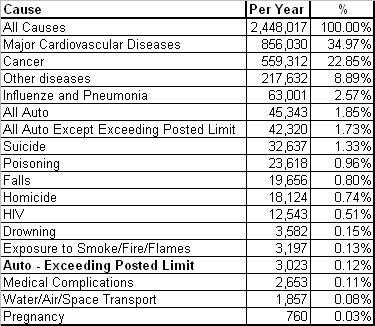
Speed cameras are usually touted as a safety measure to reduce accidents. But even if speed cameras were successful at eliminating all accidents caused by exceeding the posted limit, crashes would only decline by 1.6% according to an analysis of data from 25 states.

It is clear that enforcement of speed limits is more about raising revenue that safety. But the reality is also that speed is the easiest violation to enforce, as well as the most objective.

If we really wanted to improve safety, we would employ a scientific traffic engineering approach to analyze all of the data to hone in on the most serious preventable causes of crashes and address those with a scientific approach. Instead, the world seems content to pretend they know and understand traffic engineering and have an understanding of traffic safety based on assumptions and guesswork. How else can we explain why there has yet to be (to our knowledge) a city's traffic engineering department recommend, suggest, or request speed cameras to solve a safety problem? It's always camera companies convincing police departments to pursue photo enforcement. The police know little about traffic safety, they know law enforcement. They do not understand or know the science behind many of the traffic laws and the numbers that appear on speed limit signs, all they know is what the law is and they are told and believe that enforcing the law improves safety. This does not make them experts in traffic safety.

Redflex Driver Violates Multiple Traffic Laws

Redflex is no stranger to violating the law, and today was no exception. A Redflex photo radar van was spotted violating multiple traffic laws today on its way back to headquarters in North Phoenix. The first traffic violation is ARS 28-751 which requires drivers to turn into the first available lane when making turns. This van does this twice, despite the clear illustrations available in the Arizona Driver's Manual. In addition to making this violation twice, the scam van also exceeded the posted limit on Deer Valley road by as much as 10mph as reported by the driver who took this footage. The video also shows the driver veering outside of his lane.

Of course, Redflex believes it is above that law so this doesn't stop the company from behaving as they please. Do you think Redflex will pay the photo ticket we send them, or throw it in the trash like many other Arizonans do with their tickets?

It's Not About the Children - the Photo Radar Scam

This article appeared about 6 weeks ago in the Star Democrat and I wanted to mention it  because it summarized the photo radar scam quite accurately. Rick Kollinger had a few gems (below), but it's worth reading the whole article:

In recent years, I've become suspicious of anything politicians do when they add, "it's for the children." It's rarely for the children and is yet another revenue enhancement stream.

People rarely challenge the tickets they're given because they're only 40 bucks and no points go against your license and your insurance company is not involved. If you should challenge the ticket, you have to call the company and request a court date, and should you like a representative from the company there, you must request it in writing. However, should you take the time, you'll win the case because the documentation for these radar devices is extremely lax, with out-of-date certification, no on-site calibration, and the fact that the cameras can be manipulated from Illinois. In other words, instead of towns leasing these cameras and policing them themselves, they've allowed an out-of-town entity to run them even though it's in the company's interests to give out as many tickets as possible. A clear conflict of interest (not unknown in Maryland).

Successful speed cameras require fair speed limits

Here's another great article written by Jack McKay that appeared at GreaterGreaterWashington.org. Beautifully written, this piece helps to explain the reality of speed limits and driving habits. Of course, nothing compares to the widely publicized guide that can be found on the Arizona DOT website. These guides explain that basically, people are safe drivers by nature and that everyone drives at a speed that is naturally comfortable and safe. This is why the 85th percentile speed is often the best speed limit for a given road.

Both ADOT and McKay explain how it's not surprising that people drive above the posted speed limit on roads where the 85th percentile speed is significantly higher than the posted limit. Is it that a vast majority of the population has complete and utter disregard for traffic laws? No! Is everyone in such a huge hurry on the roads? No! People are simply driving at a natural and comfortable and SAFE speed:

Now, an example, namely Porter Street/Klingle Road between Cleveland Park and Mount Pleasant. This looks like a bit of interstate highway plunked down in the middle of the city, evidence of a long-forgotten plan to make Piney Branch Parkway into an inner-city crosstown highway. It's a four-lane divided roadway, limited access, no residences, no businesses, no crosswalks, no cross traffic, and it's no wonder that drivers speed up at this point, not because they're crazy speedsters, but because the road is clearly built for higher speeds.

The 85th-percentile speed for this road is 41 mph, as indicated by the 2006 Speed Study Map. Hence, the speed limit should be 40 mph, or maybe, if we're being conservative, 35 mph. But in actual fact, the posted limit is 30 mph, which is more than "slightly lower" than the 85th percentile. It comes as no surprise that the speed camera placed at this location has been a bountiful source of speeding tickets.


It's no surprise that traffic engineering has played virtually no part in the decision to set the speed limits and in the decision for the best solution to the alleged speeding problem. According to the engineering guidelines here, the speed limit should be higher which would eliminate most of the technical law violations with no impact or even an improvement in safety. But instead, the city chooses to CASH IN on this engineering deficiency rather than correct it and truly do something to improve safety and respect the motorists who drive there.

Iowa DOT Takes Honest Approach to Traffic Safety, Angers Windsor Heights Officials

IDOT recently rejected a request by Windsor Heights to install speed cameras on a stretch of highway. This upset officials who planned to cash in on the highways' deficiencies with automated ticketing. IDOT referred to several planned roadway improvements that will improve safety for the road including ramp metering, widening a shoulder, and a new auxiliary lane. IDOT also suggested an increased police presence.

But Windsor Heights officials are determined to cash in on this potential gold mine. Officials plan to appeal the decision insisting that their political and law enforcement background is superior when it comes to improving traffic safety compared to the guidance that the professional traffic engineering team at IDOT can provide. Why fix a problem with engineering to achieve natural compliance and safety when you can implement the cash-generating illusion of improved safety with automated ticketing machines?

More information available at the DesmoinesRegister.com.

Speed Camera Van Fails To Prevent Officer's Crash

The complicit press always seems surprised when a speed camera fails to prevent an accident, and here we have another case of this happening. A police officer plowed into a scam van after braking and losing control after coming over a hill and approaching the camera van. Details are purposefully omitted from the article, but is seems likely that the scam van caused the panic braking which lead to the crash. Most police officers undergo extensive driving training to avoid reactions like this. But if a highly trained officer reacts this way to a scam van, how does the average Joe have a chance? Perhaps this is why crashes tend to INCREASE when cash cameras are installed.

And if that weren't enough, clearly this shows that manning a speed camera van is a dangerous activity and low-paid workers are put in extreme danger in order to raise cash for their municipalities. Typically the danger the comes irate drivers who choose to approach scam vans and their operators including several shootings being reported worldwide in recent years. But as this article shows, the danger isn't just dangerous drivers, it is also incredibly hazardous to maintain a position on the side of a busy road just for the risk of collision with a passing car.

El Mirage Up to More Tricks

A little late, but still worth a comment... The Phoenix New Times has an excellent article about the shenanigans going on over in El Mirage. A few miles of highway known as US60 runs through El Mirage, and last year El Mirage decided to cash in on it by installing speed cameras. The problem is US60 is a highway and so installing cameras requires authorization by ADOT. ADOT's policy is that cities must justify the installation of cameras in order to get a permit, but no report was ever provided by El Mirage. This article uncovers that the justification was given verbally.

And now that the cameras have been in place for a while, we're curious to see how much more dangerous the road has become. There was a request for data from the city from a council member, but this request was stalled and will not be released until AFTER the upcoming election. Hmmmm, what does that mean? The numbers must not be pretty. Because the people who ran on the safety aspects of the cameras would probably face a tough re-election if the numbers don't show any improvement in safety. If the numbers looked great, they'd be anxious to report them. What are they hiding?

We see it time and time again, photo enforcement breeds corruption and dishonesty and brings nothing but bad news to the cities that use it. El Mirage is just the latest example.

But city officials are supposed to justify the need for the cameras, according to an agreement they have with the Arizona Department of Transportation, the state agency that grants individual cities permits needed to put photo-enforcement cameras on state highways.

ADOT doesn't have any traffic reports from El Mirage. And city officials have refused New Times' repeated requests for copies of the traffic studies and crash data they were supposed to provide to ADOT.

New Device Foils Photo Enforcement Legally

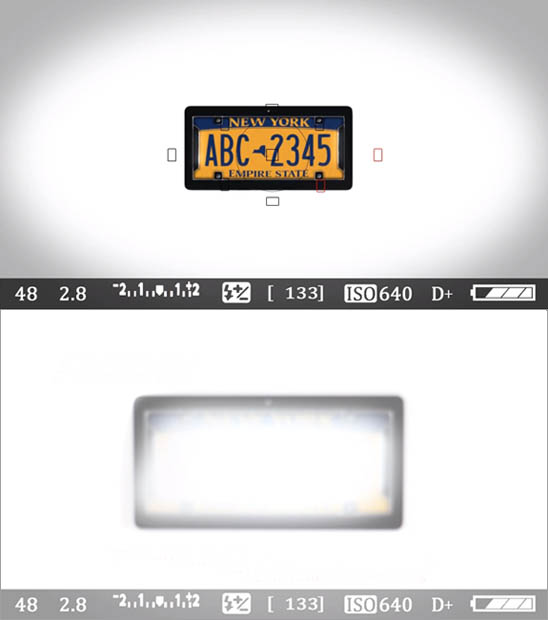
A new license plate frame foils photo enforcement by triggering a flash when it detects a flash from a photo enforcement camera. The unit is not yet available for sale but is expected to sell for $350.

Chicago Corruption Reveals New Evidence To Prove the Scam

Last week, the Chicago Tribune reported several ethics violations by Redflex consultant Marty O'Malley that resulted in the company's bid for a huge new photo enforcement contract being deemed ineligible.

Now, the Chicago Tribune has revealed that Marty O'Malley introduced Redflex to a Bryan Wagner who later became the consultant hired in Jefferson Parish, Lousiana. And just like in Chicago, there have been allegations of corruption which has led to an FBI investigation which is still ongoing. But perhaps the most revealing is this comment by O'Malley:

Yes, that's correct. I introduced them," O'Malley told the Tribune. "Bryan Wagner and I worked together when I worked for an environmental abatement company in Louisiana in the 1990s. I knew Redflex was having trouble making any headway there, so I mentioned that I knew somebody down there that might help if they were interested."

This comment says everything we need to know. If photo enforcement was as great as claimed, why would it be necessary to hire politically-connected consultants to land contracts? This means that city/parish officials were uninterested in photo enforcement for genuine reasons of improved safety. City officials weren't interested until they were persuaded by a well-paid consultant to begin a lucrative photo enforcement program. Our best guess is that no other photo enforcement companies were ever seriously considered for the contract and the bidding process was fixed. What else would you expect from Redflex? This is standard operating procedure.

Emphasis on Speed Questioned, and Rightfully So

It's worth pointing out a recent article at TheNewspaper.com about the former Australian road safety official who questioned the emphasis on speed for improving safety. We agree and have always been troubled with this obsession. Especially in light of the NHTSA report that says that "speed too fast" causes fewer than 2.9% of crashes.
The reality is that measuring speed is the easiest and most obvious violation to observe and prosecute, along with red light running which makes it an easy target for public perception and to fill government coffers. Lane violations, distracted driving, and driving under the influence are much harder to identify and have no automated ticketing solutions.
It's important to remind everyone again that "speed-related" and "speeding" can often mean "too fast for conditions" and does not mean "above the posted limit" which is the only violation a camera can effectively detect. Meanwhile there are several engineering measures that can be employed to improve safety, such as rumble strips and ensuring that speed limits are appropriate to begin with, along with public education. How about switching some revenue from the seatbelt PSA's to messages about distracted driving and driving in poor weather conditions, as well as messages to clear up misconceptions about driving laws?

Back to top

2011 (16 posts)

Red Light Ticket Beaten

Received an email from someone who beat their red light ticket. I believe that this tactic will work really well if you can delay and defer the trial for a year or more. I believe that the camera vendors only leave the video available on their servers for 6 months to a year before taking them down. So if you can extend your trial until after the video is removed, you should be good. Here's the email (edited):

In June of 2010 I got a red light camera ticket in Hayward, CA (Alameda County) for a left turn. In my opinion the light was too short for how long the turn is. Anyways, I didn't mind paying the ticket until I found out it was $500+ and that most of the money goes to Redflex not the City, County or State. First, I requested a one month postponement for when my ticket payment was due (online), then I requested and got evening/night court (via fax and mail). After I went to evening court I got a trial date. A month before the trial date I requested and got a postponement of my trial (via mail). The trial was May of 2011 (almost 1 full year after the alleged violation).

I was ready to go to trial and make my arguments as to why I think red light cameras are unconstitutional. However, before the trial begins they call everyone with a red light ticket into the hallway so they can review their alleged violation on video with an officer or employee. When it was my turn to watch my video the officer asked me if I had watched the video on-line and I truthfully said no. Then he asked me if I wanted to watch it now. I said no again because I did not want to self-incriminate myself (which is my 5th Amendment constitutional right) and second, the Judge at evening court said there is nothing they can do to reduce the $500+ fine because it is mandatory by law. So I figured what is the point in watching the video! When I told the officer about the Judges comment at night court he said actually there is something we can do and proceeded to tell me how they could knock down the fine in half. Tempting but I said no and that I wanted to go to trial. (even $250+ to Redflex is a scam to me!) The officer says 'ok' and I go sit back down in the hallway. About 5 minutes later the officer comes over to me and calls me over to him. He says that the video would not download and because he has to show me the video by law my ticket is dismissed! Awesome!!!!!!

I believe the video did download but because I refused to watch (and never downloaded online) they dismissed the case! After all the worries about paying Red Flex $500+ and the time I wasted at evening court, writing postponement letters and showing up the day of my trial, my ticket was dismissed! It was worth every second so long as Redflex did not get a penny of my money!

I hope my story can help someone else!

Supreme Court Decisions Reaffirms 6th Amendment Applies to Photo Radar

The Supreme Court has reaffirmed what Camera Fraud has been saying all along - photo enforcement is unconstitutional! Although there are several ways in which photo enforcement is unconstitutional, in Thursday's ruling in Bullcoming v. New Mexico the highest court in the land found that a defendant has a right to confront their accuser. The court case was with regard to a DUI offense, but the ruling has broad applications. In the case, the lab technician who analyzed the Bullcoming's blood sample for alcohol content was not available to testify in court, so the state found a surrogate to testify as to the lab results, procedures and methodology This is the SAME THING that happens in photo enforcement hearings on a daily basis. If applied to photo enforcement, the state would have to provide or make available the machine operator and anyone who processed the evidence for the defense. The court ruled that it is not sufficient to provide a knowledgeable representative to testify about facts in a report that he did not generate.

Unfortunately, this ruling alone will do little to stop photo enforcement, as photo enforcement hearings are done as civil trials, rather than criminal. As such, the rules are different and the state must only show a preponderance of evidence rather than prove their case as they would do if you received a moving violation from a real officer. States are able to get away with this sham because of the lower burden of evidence.

PhotoRadarScam.com Endorses Randy Miller in Surprise City Council Race

The primary election for the Surprise City Council is August 30, and there are 3 challengers to incumbent John Williams. Surprise recently started using photo radar trailers to generate revenue from local residents. Williams has swallowed the camera salesman's line and remains deluded that cameras can miraculously free up officers. Williams has not yet been able to reason that rolling out a speed camera trailer will NOT lead to any more patrol hours. If anything, it will consume MORE officer time in that the officers now have to spend time setting up the camera, checking on the camera, and sitting at a computer looking at photos, meaning they will be spending LESS time patrolling the streets.

Only one candidate has a firm and complete opposition to photo radar and we wholeheartedly support Randy Miller. Randy was quoted in the Arizona Republicas saying:

"I say 'no', they're not a value if you're looking at public safety." It is more effective for a police officer to make a contact with a driver. A camera cannot check for warrants or DUI. I was a parole officer for 20 years and from a public-safety standpoint, cameras don't cut it. They are also not effective at generating revenue and can waste court time. It's better to have an officer out there.

We agree. Elect Randy Miller to the Surprise City Council!

Another Death Caused by Speed Camera

Yet another death has been caused by a speed camera. A motorcycle rider in Bournemouth was recently killed when braking because of a scam van. Read the details here.

Another Photo Radar Scam...

Scammers have found a way to turn photo enforcement into yet another major scam to take advantage of the innocent. The scam is occurring even in places that don't have active photo enforcement programs. Because of the stealth and delayed nature of photo enforcement, even the best driver has no way of knowing if perhaps they may have been caught one of these systems. After all, how much difference is there if a scammer sends you a notice (or calls you with a collection attempt) to ask for money for an offense that may or may not have happened or if a big for-profit company does it? The only difference is a government contract.

Read more from the Vienna Patch and AZFamily.com.

Another Town in Trouble Because of Photo Enforcement

I'm going to try to do a better job of posting about lawsuits related to photo enforcement. I post them in the news sections but I don't have a page dedicated to them.

Now Bluff City finds itself along with ATS as defendants in a $6M federal class action lawsuit. If these towns haven't learned by now, photo enforcement is more trouble than it's worth:

The lawsuit alleges the city and the firm are conspiring to violate the Fair Debt Collections Act, state law and the city's own ordinances by imposing an administrative fee of $40 on top of the $50 fine imposed for motorists allegedly captured on the city's two speed enforcement cameras on Highway 11E. The plaintiffs further allege the city and firm are "threatening criminal prosecution for contempt of court and suspension of driver's licenses" if the fees and fines aren't paid.

The action also alleges the city created a "speed trap" on the section of Highway 11E under enforcement by the city's cameras by dropping the speed limit from 55 mph to 45 mph less than a mile from where the cameras are posted.

Read more here.

Crash Caused by Speed Camera

As a follow up to this previous post where a speed camera caused a death, we have evidence of another speed camera causing a crash in this article.

Even though the alleged driver was not in control of his motorcycle at the time the photo was taken, he was still issued a ticket.

Chalk another one up in the evidence of cameras causing crashes category.

City Plans to Axe Red Light Cameras to Free Up Officers

Camera companies have long touted their camera systems as tools to "free up officers" for more important duties. PhotoRadarScam.com has disputed this claim from the beginning because cameras do NOT increase the number of police patrol hours (unless profits are used to pay for more hours or hire more staff). We have maintained that cameras REDUCE patrol hours because officers now spend hours and hours sitting in front of a computer rubber-stamping - er - reviewing citations rather than patrolling streets.

Now KRDO.com is reporting that police chief Pete Carey of Colorado Springs, CO wants the city to end its red light camera program in order to free up police for more important duties in addition to the fact that, "it did not meet safety expectations." The truth is out.

PIRG Releases New Report on Speed Cameras

PIRG, the federation of Public Interest Research Groups, released a report today about the spread of red light cameras across the country. The report doesn't get into the safety debate regarding photo enforcement, but it does cover the political and contractual issues regarding photo enforcement, as well as a brief discussion the recommended approach for considering photo enforcement. The report exposes the industry's practice of heavy and extensive lobbying and pushing contract terms that favor profits over safety and even goes so far as to penalize engineering improvements to increase safety at the expense of reducing violations. The report reinforces the views presented in this websites Alternatives page, which recommends engineering studies and alternatives before resorting to enforcement.


Redflex, City of Peoria Violate State Law, in No Hurry to Remove Cameras


Despite the announcement in mid-September, red light camera contractor Redflex waited almost 4 full weeks to remove its equipment after losing its contract with the City of Peoria, AZ. The city's contract officially ended on October 3 after failing to reduce accidents after 3 years of operation in what was initially started as a 1 year "pilot" program but never once showed a reduction in accidents.

Redflex and the city completely disregarded ARS 28-1204.B.3 and left its "Photo Enforced" signs in place even after the cameras were turned off. State law requires photo enforcement warning signs to be removed when systems are no longer operational.

See additional photos of the camera removal.

In a related note, Redflex's cameras installed in Tempe are still in place after being turned off in mid-July.

Update: 6:30PM

Redflex ups the violations with CRIMINAL LITTERING! Workers left photo enforcement equipment at the scene as of 6:30pm. ARS 13-1603 classifies litter for a commercial purpose as a class 6 felony. Watch the video below.

Update 9:00PM

As to be expected, Peoria police refuse to issue any citations or hold anyone accountable for either violation. For 3 years police had no qualms about issuing red light tickets for trivial 0.1 second violations, but now after a company has abandoned construction scrap in a public right away for over 10 hours, and with photo-graphic evidence of when the litter was left and who left it, the police have ZERO interest in pursuing a felony conviction. Additionally, the police have ZERO interest in holding anyone accountable for violations of ARS 28-1204.B.3 either. As you would expect, it's OK for them to hold the public accountable, but forget about holding anyone in the government responsible.

ODOT Recommends Removing Red Light Cameras after 77% Increase in Crashes, City Extends Contract

It's no surprise, but yet another city is blinded by the easy revenue from red light cameras that they insist on making decisions that are contrary to the public's safety. The Statesmen Journal reports that ODOT recommended removing cameras in Salem, OR after accidents increased 77%.

In the 50 months before the cameras went up, crashes averaged .62 per month. In the 21 months after installation, the average increased to 1.09 per month, ODOT reported.

But as we've seen time and time again, the city chooses to ignore the recommendation and opts to continue or expand the program. Shame on you, Salem!

A Round of Applause For Syracuse

City officials for Syracuse are to be commended for doing proper due diligence prior to installing red light cameras and rejecting Redflex and other vendors. In an article from Syracuse.com, officials cited many reasons for opting against the scam including the demise of cameras in LA and Houston and the fact that many other states have banned their use. They also cited the fact that the cameras don't cite the driver (just the owner), and the fact that they weren't convinced that the cameras would improve safety.

"Tom Herrmann, of Redflex, one of the companies that bid to put cameras in Syracuse, said the city will be missing out [on lots of revenue]."

Too often city officials fail to do proper due diligence and blindly opt to go down the same roads that other cities have already gone down with failed camera programs. The only way to explain this behavior is corruption or incompetence. Syracuse officials, however, have proven they are neither.

Redflex Loses Another Contract

The city of Gardena, CA, wised up today and voted UNANIMOUSLY to end the city's red light camera program operated by Redflex. As reported by DailyBreeze.com:

Mayor Paul Tanaka said he supported the staff's recommendation to stop using the cameras because it is too costly and doesn't seem to be reducing traffic collisions.

"First and foremost, the financial hole that this is creating, in addition to the lack of evidence that the program is in fact being effective," Tanaka said.

Furthermore, a Gardena police study of the program found no substantial decrease in traffic collisions at the red-light camera intersections since the system was installed in 2006.


Congratulations Gardena!

Dubious Traffic Engineering and Politics Predominate Over Public Safety on Arizona Roadways

People place blind trust that the governments responsible for determining speed limits are qualified and have conducted a proper analysis to arrive at the correct number. Many firmly believe that driving even just a little above the posted limit can be indeed be extremely dangerous. But this new video on Youtube shows that posted speed limits we see are sometimes nothing more than the result of a political whim, as in the city of Peoria, AZ the limits are established by ordinances that are established by the city council. Although difficult to see, the video shows a roadway in North Peoria, the stretch of Pinnacle Peak between 83rd Ave & 91st Ave where speed limits are set for 30mph going Westbound, but 45 going eastbound. There is no discernible difference in each side of the road (low density residential with no schools or school crossing), and the road is one lane in each direction. What could the engineering justification possibly be to call for a 15mph difference in speed limits based only on what direction you're going? The only reasonable answer is that the city wants to create a speed trap.

The video also shows another location just south of Happy Valley Road on 91st Ave. As you approach the 3-way intersection, the last 1/8 of a mile drops from 40mph to 30mph. When you turn from Happy Valley onto 91st Ave southbound, you can go 45mph for the 1st 1/8th mile, then the limit drops to 30mph for about 3/8 of a mile, then raises up to a standard 40mph limit. Again, there are no schools and no discernible changes in road design or neighborhoods over these distances. These limits are nothing more than a speed trap, and nothing more than city officials screwing with drivers.


What's interesting is how all of this sharply contrasts with information published by ADOT about speed limits.
Since most citizens can be relied upon to behave in a reasonable manner as they go about their daily activities, many of our laws reflect observations of the way reasonable people behave under most circumstances. Traffic regulations are invariably based upon observations of the behavior of groups of travelers under various conditions.

Generally speaking, traffic laws that reflect the behavior of the majority of vehicle operators are found to be successful, while laws that arbitrarily restrict the majority of drivers encourage wholesale violations, lack public support, and usually fail to bring about desirable changes in driving behavior. This is especially true of speed zoning.


ADOT continues to explain that reducing speed limits will NOT change traffic speeds and will not change accident frequency and that there is no "direct relationship between posted speed limits and accident frequency" and that, "speed in itself is not a major cause of accidents." ADOT then proceeds to identify such locations as those described in North Peoria as a speed trap:
It is accepted within the traffic engineering profession that there is a demonstrated need to produce as much uniformity as possible in the traffic flow and to eliminate the so-called speed trap. A speed trap may be defined as a street or road which is wide enough, straight and smooth enough, and sufficiently free of visibility limiting obstructions to permit driving a certain speed, but where the law nevertheless calls for a much lower speed.

According to ADOT, "Speed zoning in Arizona is based on the widely accepted principle of setting speed limits as near as practicable to the speed at or below which 85 percent of the drivers are traveling." But after spending a few minutes on the side of the road at either of these locations one can clearly see that the 85th percentile speed is closer to 40 or 45mph (common on Phoenix-area arterial roads) than the 30mph displayed on the speed limit signs.

So why is the city of Peoria so careless about road safety? There are only a few possible answers:


  1. Arrogant and/or incompetent city council who either believes they are qualified traffic engineers or that they know more than traffic engineers.

  2. They have allowed incompetent city traffic engineers to remain employed.

  3. They are more interested in revenue generation from speed traps than safety.


For clues to the answer, we can look to other city council decisions. Over 3 years ago, Peoria started a pilot red light camera program at 4 intersections. The results were disastrous, leading to over a 100% increase in accidents. But for some reason (read: $$$), the city decided to renew and extend the "pilot" program multiple times (guess they don't understand what you're supposed to do when a pilot program fails). Finally after 3 years and continued disastrous results, the city reluctantly ended the dangerous cash cow red light camera program after being unable to justify the program under the guise of safety any longer.

But the city of Peoria isn't alone in the world of dubious traffic engineering. Take the new stretch of 303 West of I-17 for example. This is brand new freeway, 2 lanes in each direction separated by a significant distance. This stretch has very few on and off ramps, and very little traffic. Yet the speed limit is only 55mph! Contrast this to the 101 freeway which has a great deal of traffic and is usually crowded, on and off ramps every 1 mile, and the limit is 10mph faster. I don't think you have to be an engineer to know that the new stretch of 303 freeway is every bit as safe as the 101, if not safer. So why the lower limits?

Arizona Revised Statutes, Section 28-702 allows the establishment of speed limits on the State Highway System "upon the basis of an engineering and traffic investigation." The MUTCD also requires a traffic engineering study. So where is this engineering and traffic investigation that found a speed limit of 55mph to be appropriate on the 303 but not on the 101?

State and local governments have become lazy, arrogant, and exploitative. They have forgotten that their purpose is to serve the people and do what's in the best interest for the public rather than the government. ADOT's own literature contradicts their actions and appears to violate state law. This isn't about safety. It's about what it's always about: power and money.

Pima County Wants to Fix Poor Intersection Design With Cameras

Pima County officials appear to be manipulating light timing in order to justify the installatin of red light cameras. With or without rd light cameras, this video makes it clear that what is really needed is solid traffic engineering, NOT enforcement!

Ohio Judge Provides Information That May Be Useful in Fighting Photo Enforcement Citations

In the recent case of City of Parma vs. Demsey, the defendant was unsuccessful in defending himself in what was likely a kangaroo court for photo enforcement. Demsey appealed, but he apparently chose the wrong basis on which to appeal. While Sean C. Gallagher agreed with the denial of the appeal, he did offer the following gems which should be very useful for anyone looking to defend against a speed camera ticket (the full text may be found here):

{¶ 23} I concur fully with the judgment and analysis of the majority. I write separately to address concerns about due process and the admission of "technical" evidence with no record that it has ever been vetted for reliability.


{¶ 24} "There is no such thing as a perfect person, a perfect machine, or a perfect computer operating system."


{¶ 25} The use of automated technology in society is increasing. Surprisingly, the admission of evidence derived from these new technologies is often unchallenged in Ohio courts. Often, as here, there is a presumption that everything works and is reliable.


{¶ 26} In this case, Demsey was given a copy of a document titled "Statement of Technology" that purports to explain the reliability and operating nature of the Redflex Technology equipment that measured his speed.


{¶ 27} Under Parma Codified Ordinancess 313.035(D)(4), the hearing officer may consider, as an affirmative defense, that the automated traffic enforcement camera system "was not operating properly." Despite this phrase, no standards for admissibility or reliability are outlined in the Ordinances. There is nothing referencing source codes for operation, margins of error, calibration (if applicable), radio interference (if applicable), weather, or other potential considerations that may affect the result. If the equipment is turned on and gives a result that the operator can explain, the motorist is liable.


{¶ 28} Analogous to municipal governments embracing automated traffic enforcement technology is Ohio's reliance on technology to enforce drunk driving under Ohio's O.V.I. laws. R.C. 4511.19(D)(1)(b) creates a mandatory duty to follow Ohio Department of Health regulations for admission of test results involving bodily fluids for alcohol levels as outlined under the Ohio Administrative Code. Unlike O.V.I. enforcement, automated speed technology is not subjected to any independent review prior to implementation. Apparently, in this case no independent judicial review of the information contained in the "Statement of Technology" covering the reliability of this technology or the equipment occurred. Further, no administrative agency of the local government "vetted" this technology or the equipment to ascertain its reliability. The city of Parma entered into a contract with a private vendor, and inherent in this contract is the presumption that the science, the equipment, and the operator are apparently infallible.


{¶ 29} I am not suggesting that a Daubert hearing is required in every automated traffic enforcement case. Daubert v. Merrill Dow Pharmaceuticals (1993), 509 U.S. 579, 113 S.Ct. 2786, 125 L.Ed.2d 469; Miller v. Bike Athletic Co. (1998), 80 Ohio St.3d 607, 687 N.E.2d 735. Nor am I ignoring the fact that a vendor may be able to produce test results from the manufacturer that trumpet the accuracy and reliability of the device in question. Despite this, at some point courts cannot abdicate their responsibility to independently determine what evidence is admissible based on some objective standards of reliability.


{¶ 30} Further, Ohio Evidence Rules 104 and 402 address general admissibility and relevance questions about evidence. Specifically, Evid.R. 702 provides even more specific guidance.3 At section (C), the rule states:

"To the extent that the testimony reports the result of a procedure, test, or experiment, the testimony is reliable only if all of the following apply:


"(1) The theory upon which the procedure, test, or experiment is based is objectively verifiable or is validly derived from widely accepted knowledge, facts, or principles;

"(2) The design of the procedure, test, or experiment reliably implements the theory;

"(3) The particular procedure, test, or experiment was conducted in a way that will yield an accurate result."

{¶ 31} No such judicial or administrative requirements are set for automated camera enforcement as used in this case.


{¶ 32} The Ohio Supreme Court, in a 4-3 decision, in 1984, held that an accused did not have a constitutional right to offer expert testimony to challenge the reliability of intoxilyzers in general. State v. Vega (1984), 12 Ohio St.3d 185, 463 N.E.2d 1303. Nevertheless, a defendant could still challenge the accuracy of his specific test results. See Vega. In either instance, the admission or denial of such evidence is predicated on the requirement that standards are adopted and followed that support reliance on the results received from the testing process. No such standards exist in this case.

Back to top

2010 (17 posts)

Another City Shows Increased Accidents from Red Light Cameras


Peoria would like you to believe that they are alone in experiencing an increase in accidents due to red light cameras, but they are not. They join Los Angeles, Grande Prairie (Canada), Clarksville, TN, Temple Terrace, FL, and now Spokane, WA in recent announcements about the failure of RLC's to make intersections safer. The Seattle Times reports:

Intersections where Spokane installed red light cameras in 2008 in the name of safety saw an increase in crashes and injuries in the first year of the controversial program.

There were 38 collisions at the three intersections the year after the city began fining violators caught on tape. That's up from 32 the previous year, according to police collision reports provided to The Spokesman-Review.

Injury accidents at the intersections also rose from 11 the year before to 14 after.


Like the other cities, Spokane officials scrambled for excuses and justifications as to why the citizens should continue to be subjected to intersections where they face a greater chance of injuries so that the city can continue to enjoy what amounted to $108,000 in profit for 2009:
Spokane Mayor Mary Verner called the data "interesting," but cautioned that it's too early to make a final judgment on camera enforcement.

"The program has been effective in that we seem to have caught a lot of people running red lights," Verner said. "If we're not seeing a decline of injury collisions, then we need to figure out why not."


If Spokane officials were honest, they'd join the likes of Southland City, CA, San Bernardino, CA in pulling the plug on their camera programs, a move that truly would make their cities safer.

DPS 2009 Numbers Not All They are Cracked Up To Be


Local news outlets tonight are regurgitating DPS' press release with 2009's traffic statistics which show a significant decrease in crashes when compared to previous years. Naturally, the credit is all going to photo enforcement - completely ignoring other significant contributing factors and trends: fewer miles driven due to the economy and unemployment (and less-crowded roads), new, draconian DUI laws, stricter teen driver's license laws, safer cars, improved roads, and more.

So we did some number crunching of their own, and the results are NOT surprising. Our neighbor Nevada, who isn't using photo radar experienced a similar decline in crashes when compared to Arizona. Their data is available here, but unfortunately does not include December numbers. Still the numbers provide perspective. To arrive at these numbers, we summed the data from the Northern, Central, and Southern regional reports.

Arizona beat Nevada by only 5% in total crash reduction and 4% in road fatalities. Suddenly, the 26% reduction in fatalities isn't the grand achievement DPS is trying to take credit for.

Another problem with the Arizona data is that the numbers are statewide for all DPS-investigated crashes. This includes thousands and thousands of miles of roads, but there are only 36 fixed camera locations and 40 mobile units distributed about the state, and the sphere of influence for the cameras is quite limited. The cameras can't be credited for improvements in locations where they aren't installed or frequently present.

In the past, DPS has released data strictly for camera installation locations. It's suspicious that DPS resorted to reporting statewide numbers rather than location-specific numbers. Something tells us we're not seeing the whole picture... Stay tuned.

And while we're at it... Have you ever wondered why the state doesn't follow the advice set forth in ADOT's speed limit information page? Despite understanding that the 85th-percentile speed is the safest speed, most roads around the state are set far below this standard. Kudos to Utah for trying to comply with this standard and actually trying it with very positive results.

Revenue or Safety? Colorado Officials Admit Red Light Cameras About Revenue

In a recent article out of Colorado, officials made a blunder that indirectly reveals that red light cameras (RLCs) are all about the revenue. According to the article, Colorado Springs police officials have identified red light camera locations based on the safety needs of the community, but that's not good enough.

“The vendor will also take a month or two to determine if the intersections we choose are appropriate. This isn’t a quick process due to the interaction of the vendor with several city agencies.”

It turns out that what the city believes are the locations in need of the biggest safety improvements aren't necessarily going to be the locations that get cameras. The final say on locations goes to the camera vendor. The camera vendor; however, is not interested in safety but rather the bottom line.

What can be inferred from this information is that the city may decide NOT to put cameras at its most dangerous intersections because it isn't profitable enough to do so. Even though they may consciously believe that cameras will improve safety at the locations that need it most, they will decide not to for money concerns, which makes this next statement a complete lie:

Whitlock reiterated the Police Department’s stance on red-light cameras and photo radar: They’re not designed to be money-makers.

“That’s not why we’re doing it,” he said. “We’re doing it because it’s the right thing to do for public safety, not to build revenue.”


So let me get this straight... if you have a dangerous intersection that you believe could be helped with cameras, but the vendors says the intersection isn't going to be profitable, you won't put one there anyway in the name of safety?

I think the answer is clear.

It's official: Speed cameras are a scam

Catching up with some old items on my to-do list, honest officials in the UK admitted that speed cameras are indeed a scam.

Chiefs in Swindon, Wilts, reckon the results have proved that the cameras didn't save lives - but were only there to make money.

Swindon Borough Council leader Rod Bluh said: "Figures vindicate the fact that cameras make no difference to fatal accidents or any accidents.

"We are confident we took the right action in getting rid of them."

Some safety campaigners feared a surge in fatal accidents after Swindon mothballed its Gatsos on July 31.

But while there was one fatal accident between August and October 2008 there were NONEe in the same three months this year.

Pima County Propaganda

Pima County has issued their latest propaganda to convince the public that the scameras are working. But a closer look shows that the picture is not as rosy as it seems.

As is typical with photo enforcement press releases, all credit is given to photo enforcement and all other factors are ignored. Forget about the new draconian DUI laws, stricter teen driving regulations, and overall fewer vehicle miles and lower road densities due to the economy. All credit goes to the cameras.

But if we look at the data, we notice that of all 10 camera locations, accidents only decreased at four of the two locations, with accidents increasing at 3 locations and remaining pretty much the same at 3 locations. At the Nogales highway location, accidents rocketed from 21 to 35, and at the Ruthraufe/Wetmore location accidents plummeted from 94 to 40. Such a drastic change (both up and down) should prompt an explanation as the numbers for those locations are out of line with the rest of the locations, but none is given. If we throw out those locations, accidents are down a statistically meaningless 2% from the first half 2009 (without cameras) to the second half (with cameras) - well within the natural variation from any 6 month period to the next.

Results on speed reduction were also mixed. Results for 4 locations were summarized:
1) Ina Rd., east of 1" Ave., % mile east of PEC: both the 85th percentile speed and the "citable" speeds are continuing to drop significantly for the latest "after" period.
2) Valencia Rd., east of Cam. de Oeste, 1 mile/+ west of PEC: no real difference in the latest "after" period for the 85th percentile speed, but some continuing reduction in the "citable" speeds.
3) 1" Ave., south of Rudasill (no PEC on this corridor, but in the vicinity of the h a PEC): a small reduction in the 85th percentile speed from the "before" period to the latest "after" period. Continuing reduction in the "citable" speeds.
4) Craycroft Rd., south of River (no PEC on this corridor, but in the vicinity of the Swan PEC): No measureable difference in either the 85th percentile speed or the "citable" speed from the "before" period to the "after" period.

The results don't seem very convincing. If anything, it indicates that the speed limits are probably set too low or that other measures are needed, especially if you believe ADOT's page on setting speed limits.

Overall, it's clear that the media has failed to take an honest, objective look at the information given to them and that they have not asked any questions. At best, the results are mixed. It's a shame that the media doesn't have enough wherewithal to question the statements furnished by leaders. Clearly factors other than photo enforcement play into the road safety data, yet the report and the press release make no mention of this. Who are they trying to fool?

Redflex Lies Again - Claims to Use Test Lab That Doesn't Exist!

The Herald Sun reports that Claus Salger, an electronics engineer and John King of Victoria, Australia successfully proved that Redflex had claimed in official documents to use a testing lab that didn't exist. According to the article:

He and Mr Salger proved E and E Testing Laboratories, the company named on official documents as having calibrated a camera in Nth Balwyn, did not exist.

After proving this, Mr. King won his court case but he has been awaiting payment ever since. The city that owes him the refund has yet to pay after 8 months. Mr. King was awarded a Sherrif's warrant so that he can now confiscate police assets to satisfy the court order.

It's our opinion that the newspaper glossed over the most important aspect of this story - the fact that Redflex LIED about the calibration of its equipment. It sounds to me like this could be grounds for a class action lawsuit.

Chandler Photo Enforcement Error Rate 52%

<a href="http://camerafraud.files.wordpress.com/2010/03/outrage-1.jpg"><img title="outrage" src="http://camerafraud.files.wordpress.com/2010/03/outrage-1.jpg?w=300" alt="" width="300" height="215" /></a>
According to the <a href="http://www.eastvalleytribune.com/story/151691" target="_blank">East Valley Tribune</a>, Chandler's red light cameras result in enforceable tickets only 48% of the time. For fiscal year 2008-2009, the cameras flashed 29,000 times; however, 8000 of those tickets failed to capture critical information according to Detective Dave Ramer. Of the remaining tickets, 7000 (24%) were of commercial vehicles belonging to companies that refused to divulge the identity of the driver. According to the Insurance Institute of Highway Safety, an average of 28% of drivers are NOT the registered owner the car, which further adds to the difficulty of issuing tickets. Then we know that of the 48% of "successful" tickets, only a fraction ever get paid.

The Chandler City Council is now contemplating an expansion of the system. But would the Chandler City Council have voted for the cameras had the sales pitch to Chandler been more honest to begin with?

<strong>Redflex</strong>: "We have this system that photographs drivers who run red lights... except we can only target a fraction of the people driving by, and it only works 48% of the time.  But did I mention we, (*cough*) I mean <em>you</em> can still make lots of money?"

The article goes on to imply that Chandler is disappointed that it couldn't cash in on all of those missed opportunities, and had to settle for a paltry $300,000 while sending millions of dollars (drained from the local economy) to Redflex.

If the same statistics hold true for freeway traffic, 1 in 4 cars passing by a freeway camera are immune from photo tickets because of commercial plate registration. Again we ask, how is this constitutional? As a reminder,

<a href="http://www.azleg.gov/FormatDocument.asp?inDoc=/const/2/13.htm" target="_blank">Arizona constitution, Article 2, Section 13</a> states:
<blockquote>No law shall be enacted granting to any citizen, class of citizens, or corporation other than municipal, privileges or immunities which, upon the same terms, shall not equally belong to all citizens or corporations.</blockquote>
It would seem to us that over 25% of the drivers on the road have inherent "immunities which, upon the same terms, (do) not equally belong to all citizens." Compare this to human officers who can pull anyone over at any time for any reason.

<strong>Call To Action</strong>: The Chandler City Council is voting on whether to expand the red light contract on Thursday, Mar 11. <a href="http://www.meetup.com/camerafraud/messages/boards/thread/8712387" target="_self">Click here</a> to find out how you can help influence their decision.

Court Ruling: Vehicle Registration Match Insufficient to Qualify as Reasonable Grounds to Issue Photo Ticket


From the beginning, scamera vendors and officials have attempted to quell concerns of legitimacy by stating that an officer will review each and every citation. The problem is, no one ever asked exactly what they'd be reviewing. We should have known better...

In an Oct 2009 court ruling from the Maricopa County Superior Court, a judge has ruled that a photo traffic complaint is not properly issued if an officer merely matches that the sex of the person in the photo matches the sex of the vehicle registrant.

A.R.S. § 28-1561 states that traffic complaints need to contain a certification “by the issuing officer in substance as follows: ‘I hereby certify that I have reasonable grounds to believe and do believe that the person named herein committed the offense or civil violation described herein contrary to law.’" However, an aide from the Tempe police department testified that they only match sex, and do not look at physical descriptions.

Therefore, the court concluded that the traffic complaint was improperly issued because the officer did NOT have reasonable grounds to believe that the defendant committed the offense. That doesn't seem to have had any effect on procedures, as the police still issue tickets even with obvious race and appearance mismatches. Judges don't seem to want to enforce section B of the statutes which states:

B. A false certification under the provisions of subsection A is perjury.

Anyone receiving a photo ticket where the officer clearly made a false certification needs to request that the responsible officer be charged with perjury as is appropriate under this statute.

All of this information gives further vindication to Avoiding Photo Radar Tip #18 which suggests that all married couples cross-register their vehicles.

Sykesville Rejects Photo Radar

The streak continues, photo enforcement has yet to survive a public vote.

Yesterday, the town of Sykesville, MD voted in a referendum to reject speed cameras.  This makes Sykesville the 10th jurisdiction to reject photo enforcement by referendum.

Redflex, ATS, and officials continue to claim that automated ticketing enjoys wide public support, but the ballot results have never affirmed this assertion. Congratulations Sykesville!

A New Perspective on Photo Enforcement

When photo enforcement is debated locally, arguments are seldom made that consider the impact on visitors and tourism. I suspect public officials view these visitors as easy prey to suck in more revenue, but that view is very short-sighted as those cameras leave a lasting (negative) impression and will undoubtedly be a topic of discussion to friends and family after returning from the trip, potentially discouraging others from visiting and reducing tourism dollars.

Recently, work duties took me to France, another country that has been plagued with speed cameras. This visit gave me some perspective that not a lot of people consider when thinking about photo enforcement. As a visitor to France with some time to kill and a rental car, I was ready to hit the roads, see some sights, and contribute to the local economy. But after driving a short distance down the freeway and encountering several scameras, I decided to limit my travels rather than run the risk of being charged hundreds of Euros for inadvertently driving a few km/h too fast. As a visitor to France, I have no idea how tickets to a rental car driver from the USA are handled. Perhaps I am immune, but perhaps the rental car company passes those charges on to me. And I have no idea if there is any room for error or if they issue tickets for 1km/h over. But being overwhelmed with both navigating and the driving at the same time without assistance, I knew there was no way that I would notice each and every speed limit sign and adhere to the laws 100%, no matter how much I wanted to. The best I could do was to use my common sense, pay attention as much as I could, and try to just go with the flow and stay out of people's way. My driving was in no way dangerous or unsafe, yet I knew the automated ticketing machines would give me no slack as a live officer probably would. Worse, I knew that I would have no chance to appeal any tickets through any judicial process as I would not be there for the court date.

We take our local surroundings for granted because we drive our roads every day and we are familiar with the signs, and are generally aware of what speed limits should be even if we haven't seen a speed limit sign. But when you travel to another country like France where the cars are different, the roads are smaller, the road signs are completely different, and you have no idea about where you are going, maybe a little more leeway with law enforcement is appropriate (and I suspect, usually given). While I did my absolute best to adhere to all traffic laws, the driving experience was quite overwhelming. A few examples of areas of confusion that I experienced was with regard to right turns on red, which it turns out are prohibited, and along the freeway it's not uncommon to see multiple speed limit signs, some of which apply to the road you're on and others that apply to exits you're driving by. It's definitely confusing to the uninitiated. Was I driving above the posted limit in some locations? Probably. Do I deserve to be financially penalized for every time I was over the limit? I would certainly hope not. Did the cameras make me a safer driver? Most certainly not. So what did the cameras in France achieve? Nothing, except robbing the local economies of revenue.

Cameras on our Interstate highways are most certainly targeted at visitors and a majority of drivers who are probably not frequent travelers of that roadway. City speed cameras are certainly targeted more at locals, but visitors are still affected. But I think the conclusion here is still the same... nothing replaces the judgment and capability of a live police officer. Only an officer can give a break to a visitor who's just trying to make his way around and survive our roadways. An officer can also remove someone (even a visitor) who is unfit to drive, or issue a citation to someone who is clearly violating laws with intent or gross negligence. These are all important distinctions that are vital in creating a society where law enforcement is effective and makes sense, rather than a zero tolerance (i.e., zero common sense) system with no room for error or exception.

Accidents Increase 13% in NSW After Installing Cameras

A recent article in the Central Coast Express Advocate in NSW provided some alarming statistics. Councilor Doyle says:

“This is nothing but a revenue-raising exercise which will have no real impact on road safety,” Cr Doyle said. “A similar program in Victoria has seen no positive results - in fact the accident rate there has increased by 13 per cent since these unmarked speed cameras hit the streets.

And:
“In fact there are likely to be more accidents, with motorists paying more attention to their speedometers than to road conditions.”


More evidence that speed cameras do NOT increase safety.

Cameras Coming Down In the US and Across the Pond


Ever since the British government announced and end of funding support for speed cameras across the country, headlines have been announcing the decisions of town and villages across the country to end their automated ticketing scams. While the government has always insisted that the cameras are about safety, it is definitely apparent that no one wants to actually pay for this alleged benefit as location after location is announcing the end of their camera programs.

The move is not without its critics who conveniently ignore data that shows the decades-long trend of improving road safety slowed significantly after the saturation of scameras across the land:

“Using the road casualty rate from 1978-1990 it can be estimated that 1,555,244 more road casualties have occurred from 1991-2007 than would have if the 1978-1990 trend had continued.”

These same experts are predicting a bloodbath after the end of the program, in a desperate attempt to get motorists to wonder how they ever survived without cameras taking pictures and mailing fines to the owners of vehicles. These critics also ignore the results of Swindon's decision last year to end their camera program. Six months after the switch off, there has been no increase in accidents, as well as other reports of increasing accidents.

Here in the US, Yucaipa, CA and Costa Mesa, CA recently ended their red light camera programs, as TheNewspaper.com has reported. Yucaipa was so desperate to end their contract that they paid Redflex $198,000 for the privilege. According to city data, Costa Mesa saw accidents INCREASE after installing cameras.

New Study: Speed Cameras Cause Bad Driving, Increase Crashes

We've known since they first appeared, but now it's official: Speed cameras cause bad driving. A recent poll by UK car insurance provider Liverpool Victoria, 81% of drivers said they looked at the speedometer instead of the road when a camera appeared, and 5% admitted to braking suddenly when in sight of a camera. Liverpool Victoria managing director John O'Roarke was quoted as saying, "...while they may reduce speed they also appear to impair driving ability or, at the least, concentration on the road. As this report shows some drivers behave erratically and, at worst, dangerously around speed cameras."

We agree, as free-flowing traffic with driver's attention on the road is safer than having even a small portion of drivers distracted and driving erratically.

In another report, Express.co.uk reports that cameras have caused 28,000 lives in the UK over the pas 10 years, as cameras have been cited as the official cause of 1% of all accidents.

To prove the point that the opposite is true - that removing cameras reduces accidents - the Telegraph reported Saturday on newly reduced data from Swindon. Swindon turned off their cameras 9 months ago, and similar to Arizona, experts predicted a bloodbath. Instead, the opposite has happened. Since the cameras were turned off, injury and fatality crashes were down by 4% and 50% respectively in the entire area. At the camera sites themselves, fatalities dropped from 1 to 0 and non-injury accidents dropped from 13 to 12.

Governor Brewer: Helps us improve road safety here. Let us vote on photo enforcement!

State Declines to Prosecute High Profile 'Serial Speeder' Case

After a high profile arrest and making a big deal about a 'serial speeder' case in which a Peoria man was alleged to have been caught by a speed camera 55 times (12 of which were criminal), the state has silently dropped the charges and refuses to pursue the case further, as 3TV reports.

Featured in the video news story is local attorney Michael Kielsky, who specializes in defense of photo enforcement tickets.

Unlike in civil court where most photo tickets are heard, with the criminal charges the defendant is allowed to pursue full legal discovery for any facts, information, and witness testimony that may pertain to the case. It seems that the state and/or camera operator Redflex did not want to risk divulging critical evidence that would become public record, and/or more likely, the state did not want to risk establishing a legal precedence that could be cited and used as a defense for others fighting photo tickets should the state lose. How else can we explain the state's lack of fortitude in prosecuting someone accused of multiple counts of the same offense? Neither the DPS or Attorney General will comment.

Clearly, the state had intended for the defendant to do what the uninformed do and simply roll over and pay the fines and take the punishment without a fight. But every time a case is brought to a court that seriously challenges the legality of photo enforcement and scrutinizes the evidence provided by an unattended machine operated by an independent third party, the government backs down in order to protect the money making scheme. There is no other logical reason for the state backing down from prosecution of 55 speeding violations.

In other news, the Winnipeg Free Press is reporting an INCREASE in accidents after installing red light cameras.

Across the pond, the UK Daily Mail presented results of a new study that concludes that cameras did NOT change driver's behavior.

And finally, the town of Brentwood lowers speed limits in order to install speed cameras to fill city coffers, as reported by the Washington Examiner.

Peoria Quietly Extends Contract for Dangerous Red Light Cameras

PhotoRadarScam.com has learned that Peoria has quietly approved a 6 month extension to the 1 year extension of its dangerous red light camera "pilot" program. Last year, the Arizona Republic reported that crashes had more than doubled at intersections with red light cameras, but that didn't stop the Peoria council from cashing in for another year. The new extension extends the contract on a month-to-month basis until April 2, 2011. Technically, Redflex was operating without a contract between October 1 and October 6 when the city's Materials Manager officially executed the contract extension.

A look through the contract reveals a couple of interesting items. On page 9 of the contract, provision 3.9 instructs the police to authorize Redfelx to issue a Traffic Ticket and Complaint based on a gender match despite prior Arizona Superior Court rulings that gender match is insufficient (Refer to cases of Stephen Thomas Palermo (LC2006-000235-001 DT), Craig Cameron Gillespie (LC2005-000597), and Daniel Gutenkauf. ARS 28-1561 requires a Traffic Ticket and Complaint to contain a form of certification by the issuing officer in substance as follows: "I hereby certify that I have reasonable grounds to believe and do believe that the person named herein committed the offense or civil violation described herein contrary to law" and on at least 3 occasions judges have ruled gender match is not reasonable grounds to meet this requirement. ARS 28-1561 provides that a cop issuing a Traffic Ticket and Complaint without reasonable grounds to believe they've identified the violator is guilty of perjury.

Another interesting artifact is a sample of a public opinion poll (page 63) used by Redflex to show "overwhelming" support for red light scameras. One doesn't have to be a polling expert to see how the questions are designed to achieve the illusion that photo enforcement is popular with the American public. Unfortunately for Redflex, those results have never been duplicated when a more honest polling methodology is used at the ballot box.

Did Scottsdale Officer Debbie Wood Commit Perjury?


A motorist recently received a photo red light ticket in the mail for allegedly running a red light by 0.2 seconds at the Scottsdale Rd. and Shea Blvd. intersection in Scottsdale. Interestingly, none of the photos taken clearly show the driver. This didn't stop Scottsdale Police Officer Debra (Debbie) Wood from signing the citation and declaring "I hereby certify that I have reasonable grounds to believe, and do believe, based on my examination of digital images and data associated with this violation, that the person named herein committed the civil traffic violation listed above." According to ARS 28-1561.B, a false certification is perjury.

We have to wonder how Debra Wood was able to identify the driver of the vehicle in question with most facial features hidden by the vehicles sun visor and rear view mirror. In fact, it's not even possible to identify the gender of the driver with any certainty. We know that Arizona courts have ruled on at least 3 occasions that a gender match alone is not sufficient to establish reasonable grounds of belief required to issue a ticket. So how exactly did Officer Wood identify the driver?

It appears to us that Officer Wood did indeed commit perjury, as the images simply do not provide enough information (reasonable grounds) required to identify the driver and thus to issue a ticket legally.

Two More Cities Dump Red Light Cameras

TheNewspaper.com and other news sources are reporting that both Loma Linda, CA and Whittier, CA have ended their red light camera programs due to LACK OF SAFETY results.

Most poeple don't understand how many cities have ended their programs, but TheNewspaper has summarized this for California:

Throughout the state, the same complaints have been heard throughout the year. In January, Moreno Valley dropped cameras. San Carlos canceled in April. Union City dumped cameras in June. Yucaipa and Costa Mesa ended automated ticketing in July. In November, 73 percent of Anaheim residents voted to ban cameras, although they had not been installed.

In the past, Cupertino, Compton, El Monte, Fairfield, Fresno, Irvine, Maywood, Paramount, Redlands, Roseville, San Jose (photo radar), Santa Rosa, and Upland have rejected their automated ticketing programs.

Back to top

2009 (47 posts)

Revenue quest, not safety, behind red light cameras

This article came out about how Kansas City is installing red light cameras.

Highlighted quotes: 

In fact, when red-light cameras popped onto the public agenda in 2006, then-Mayor Kay Barnes said the city should consider them because they would bring in more money.

Yep, revenue, not safety.

Public Works spokesman Dennis Gagnon says each intersection must be cleared of any hazard or impediment that might increase red-light running.

Synchronization of nearby stoplights must be improved. Obstructing trees must be trimmed. Yellow-light intervals must be appropriate. Drivers will be warned when they approach a camera-equipped intersection.

If safety is the true concern, why didn't they take these safety measures BEFORE deciding to install cameras? If all of those measures lead to a safer intersection, why wait until you install cameras to do them?

All well and good, but the argument that red-light cameras are about safety is questionable from the start. A study by the Federal Highway Administration concluded that while red-lights cameras reduced right-angle collisions, they led to an increase in rear-end crashes: Some motorists tend to slam on the brakes when approaching a camera-equipped intersection.

Yep, MORE accidents, not less.  Safety? Or revenue?

According to a paper published by the Tennessee Center for Policy Research, an increase in yellow-light time by only one second can reduce accidents by up to 40 percent.

The authors, George Shifflett and Justin Owen, report that a one-second boost in yellow-light time in Mesa, Ariz., cut accidents by 73 percent. Similar decreases were experienced in Fort Collins, Colo.

Virginia reported a 94 percent decrease in citations after a 1.5-second increase in yellow-light time. The state terminated the use of its red-light cameras, but re-introduced them in 2007.

Wow - if you can increase safety by increasing yellow light times without installing cameras and punishing people, wouldn't that be the way to go? Safety through engineering, not safety through revenue?

Another misuse of cameras in lieu of safety engineering

The latest speed camera article in the Arizona Republic is a classic case of blaming the people when the roadway design is clearly the culprit. The article highlights a particularly problematic intersection in Tempe, AZ where the speed limit is set lower than usual for an arterial street. Most similar roads would be 40 or 45mph, but this one is 35mph.

For engineers, the goal is usually to design a system, in this case an intersection or roadway, to be as inherently safe as possible so that people are naturally safe while using it. For example, if people are driving too fast down a residential street, the installation of speed bumps will naturally slow the traffic down. Additional measures can include visibility, spacing, setbacks, signage, and traffic controls.

If an intersection is seeing this volume of people "misbehaving," it's not because the people in that area are outlaws and criminals. The reason is that there is a serious design issue with the roadway and/or intersection that needs to be addressed. Sending fines to people will do not fix this problem. The City of Tempe needs to direct its engineers to get out there and FIX this problem!

Also, those already familiar with this site (webpage) already know that cameras actually INCREASE the number of accidents at an intersection. It's curious how they don't have data yet, but if it's like every other installation in the US, there will now be more accidents. It's always about revenue, NOT safety.

DPS: Most speed camera notices aren't paid

Looks like the word is getting out. The latest article in the Arizona Republic shows that over70% of people aren't paying their photo tickets. This is good news - people are understanding that a "notice of violation" is not a legal citation.

Success!

Today was quite successful. I personally testified at the House Transportation Committee's hearing on HB2106 which will ban cameras on all state highways. This is a terrific first step, but it will not remove cameras operated by counties and cities. Although my testimony probably didn't sway the vote, the bill made it through committee with a 5-2 vote, with XXXXXXX and XXXX voting against it. The other representatives were quite well informed and intelligent on the issue. These members could not see past the alleged increase in safety.

Speaking of alleged increase in safety, according to Sheriff Babeu of Pinal County, the cameras caused an increase of accidents by 16%! See the video here. Quotes: "Complete failure... for the county." "Accidents actually increased by 16%." "We've actually seen from 2007 to 2008 our actual injury accidents and fatalities actually doubled in the areas in Pinal county where photo radar was used."

Photo Service Fraud and another City Dumps Red Light Cameras

In Tucson, it was found that a process server was lying about the serving of over a thousand photo tickets. As a result, some drivers were surprised to find out that they had their licenses suspended or incurred other penalties as a result of a citation they had no idea about. This exemplifies a perfect example of what can and will go wrong due to the extra processes and steps involved in photo tickets versus human-issued citations. Here's a video.

Then in the category of revenue not safety, we are (not) susprised to find out that a city has elected to allow their red light camera contract expire after a judge ruled that the revenue from the cameras was required to go directly to the public schools rather than the general budget. We find it strange (not) that a city would want to cancel what was regarded as a wildly successful improvement in safety simply because the revenue couldn't go into the city coffers.

County JP Rules Photo Tickets Unconstitutional

Today's Arizona Republic reported that a county Justice of the Peace has ruled that the speeding tickets issued by cameras are unconstitutional. This agrees with our take on things, but with a slightly different twist.  The JP says that the constitution's equal rights  clause is violated because the penalty for a ticket issued by a human is higher than that for one issued by a camera. The JP argues that you cannot treat the same crime differently based on how the citation was issued.

While we agree on this point, we'd like to see the JP consider the groups of people who are treated differently by enforcement based on their status. In particular, I'm referring to cars registered to corporations.  Since cars issued to corporations cannot be served, they get a free pass while people driving their own cars are subject to being served with a citation.

Why or how anyone finds this disparity fair or just escapes me! How can you use a system that systematically discriminates against classes of people? In this case, drivers with cars registered to corporations!?

So now the JP is waiting for a government agency to pick up the case and move through the court system for an official decision. Will this happen? I don't know. They won't be too pleased that no revenue is coming in for those cameras, but on the other hand, they don't want any court decisions to render the systems worthless. It will be interesting to see what happens. My bet is that they ignore the court order and the case never gets decided.

Redflex and ATS Operating in Arizona Without a License!

After some initial investigation, PhotoRadarScam.com has concluded that Redflex and ATS are operating in Arizona without a Private Investigator's License. If this is validated by Arizona officials, it could mean that every ticket issued is to be thrown out and refunds for all tickets issued to date should be issued (whether or not that would actually happen is another issue). Here are the laws and what we've determined:

We were unable to find any entries for American Traffic Solutions (ATS) or Redflex at the state licensing website.

ARS 32-2401.16

16. "Private investigator" means a person other than an insurance adjuster or an on-duty peace officer as defined in section 1-215 who, for any consideration, engages in business or accepts employment to:

(b) Secure evidence to be used before investigating committees or boards of award or arbitration or in the trial of civil or criminal cases and the preparation therefor.

There are licensing exemptions, but it does not appear that Redflex or ATS fit any of the criteria defined here (too long to list): ARS 32-2409

All ATS and Redflex employees working to procure or process such evidence are guilty of class 1 Misdemeanors:

ARS32-2411

A. A person shall not act or attempt to act as a private investigator or represent that the person is a private investigator unless the person is registered as a private investigator pursuant to this chapter and is acting within the scope of the person's employment for an agency that is licensed pursuant to article 2 of this chapter.

B. A person who knowingly violates this section is guilty of a class 1 misdemeanor.

A complaint to licensing division resulted in a phone call during which the following defense by Detective Diaz was asserted:

Det. Diaz claims that a license isn't needed because DPS is authorized by ARS 41-1722 to contract with vendors for photo enforcement. We agree that DPS is authorized to enter into contracts with vendors; however, PhotoRadarScam.com maintains that DPS must hire a licensed vendor. We noted that the statute does not specify a vendor, so it must be expected that whichever vendor was chosen as a result of the law must be legal to operate in the state. For example, if a statute required DPS to hire a lawyer or a contractor, they would have to be properly licensed. A photo enforcement vendor should be no different and must be legal (licensed) in order to be considered for such contracts. Additionally, the issue is not just with regard to the DPS-Redflex contract - it affects all of Redflex and ATS's operations in the state of Arizona (and any other companies that may be operating here).

The Redflex-DPS contract page 28 section 2 (Scope of Work) explicitly contracts for duties which clearly are those of a private investigator:

2. Scope of Work: The contracted firm shall provide all equipment, hardware, software, personnel and services (inclusive of any installation) required to provide:

2.1. Identification, through photograph, video and calibrated equipment/software systems, of motor vehicles and drivers found violating Arizona traffic laws as specified in S.O.W. section 3. Mobile Systems (via mobile Van/SUV platforms) and Fixed Systems shall function accurately 24 hours per day 7 days per week in all weather conditions (mandatory) as specified in S.O.W. section 3.2.5;

2.3 Court testimony services as specified in S.O.W. section 9;

One last argument may be made that Redflex employees are exempt because they may be considered peace officers and thus exempt from such requirements. We researched the laws regarding peace officers and found the following statutes:

ARS 28-369:

A. The director and officers, agents and employees of the department or local or state law enforcement agencies the director designates are peace officers. The director may designate:

1. Regular peace officers with like authority of other peace officers of this state or cities and towns of this state.

2. Specialty peace officers whose powers are limited to the enforcement of motor vehicle laws and rules.

Subsections B and C specify that regular peace officers must meet certain requirements including training. Redflex and ATS employees are most assuredly NOT regular peace officers.

Are Redflex and ATS employees specialty peace officers then? Most certainly, No! #2 specifies that peace officer powers are limited to the enforcement of motor vehicle laws and rules. But Redflex and ATS do not perform any law or rule enforcement! They merely take pictures, collect data, and then turn that information over to the DPS or a police officer to turn into a citation. Redflex and ATS cannot issue citations! Therefor, they are not enforcing any laws.  They are no different than celebrity paparazzi except they turn their photos into law enforcement rather than a tabloid!

Clearly, unless there is some other exemption that Redflex falls under, I do not see any reason for Redflex or ATS to be exempt from PI licensing requirements. DPS cannot determine who needs to be licensed and who doesn't need to be licensed - that is determined by statute.  The exemption statute is long and specific. I do not see how or why ATS and Redflex should not be included in the exemption statute if they were intended to be exempt from the requirement.

If nothing else, for all of those who have received photo radar tickets, I believe that it would be a valid defense that the ticket should be dismissed because the evidence was obtained illegally.

What does this mean if I am correct? I believe that all tickets issued using evidence that was collected illegally should be thrown out. I believe that all current Redflex and ATS employees whose jobs are to perform the duties of private investigation shall be cited with the misdemeanor offenses that such a violation carries.

I am not an expert on law, so if any of you see an error in my logic or a law that I may have missed, please let me know.

Redflex Above the Law?

As everyone has probably seen by now, Redflex has developed and deployed mobile photo enforcement units that are SUVs that are outfitted with photo enforcement equipment. You've probably seen these SUVs parked along the side of the freeway. But did you know it was illegal for them to park there? That's right! Here's what we've found.

ARS 28-871 clearly prohibits parking on the side of freeways and highways in the state of Arizona:

A. On a highway outside of a business or residence district, a person shall not stop, park or leave standing a vehicle, whether attended or unattended, on the paved or main traveled part of the highway if it is practicable to stop, park or leave the vehicle off that part of the highway.

Section B gives an exemption to mail carriers and disabled vehicles.

ARS 28-873 prohibits parking on sidewalks and on the side of a freeway:

A. Except if necessary to avoid conflict with other traffic or if in compliance with law or the directions of a police officer or traffic control device, a person shall not stop, stand or park a vehicle in any of the following places:

1. On a sidewalk.

...

15. On a controlled access highway except:

(a) For emergency reasons.

(b) In areas specifically designated for parking such as rest areas.

Section B provides an exemption which is basically for public or school buses or similar vehicles.

ARS 28-875 provides an exception for law enforcement:

The stopping, standing or parking restrictions provided in this article do not apply to a police or peace officer when the stopping, standing or parking is for the purpose of actual performance of a law enforcement duty.

As discussed in the previous blog entry, Redflex and ATS are not law enforcement and are not police or peace officers. They are photographers operating with a contract to the Department of Public Safety. There are no exemptions for photographers or vendors to DPS.

The only possible exemption again is a possible designation of specialty peace officer status by DPS. I will not reprint the argument here because the previous blog entry debunks this possibility.

DPS will tell you that they do not make the laws, they only enforce them. As such, they have no say in whether or not Redflex, ATS, and any other similar companies are exempt from any laws.

Redflex and ATS are operating their vans in violation of the law, and DPS is allowing them to do so.

Mobile Speed Van Signage Illegal

It appears that there is yet another illegality with regard to the Arizona state photo enforcement program. This oversight invalidates all citations issued as a result of mobile scam vans! Follow along:

ARS 28-654:

B - 1. At least two signs shall be placed in a location before a photo enforcement system. One sign shall be in a location that is approximately three hundred feet before the photo enforcement system. Placement of additional signs shall be more than three hundred feet before a photo enforcement system to provide reasonable notice to a person that a photo enforcement system is present and operational.

C. Signs erected by a local authority or agency of this state as prescribed in this section shall contain a yellow warning notice and correlate with and as far as possible conform to the system set forth in the most recent edition of the manual on uniform traffic control devices for streets and highways adopted by the director pursuant to section 28-641.

D. If the standards and specifications prescribed pursuant to this section are not in effect during the operation of a photo enforcement system, the court may dismiss any citation issued to a person who is identified by the use of the photo enforcement system.

ARS 28-641:

The director shall adopt a manual and specifications for a uniform system of traffic control devices for use on highways in this state. Except as provided in section 28-2416, the uniform system shall correlate with and as far as possible conform to the system set forth in the most recent edition of the manual on uniform traffic control devices (MUTCD) for streets and highways prepared by the national joint committee on uniform traffic control devices.

So now we look at the MUTCD:

Section 2A.18 requires the sign to be at least 5ft off of the ground:

Signs installed at the side of the road in rural districts shall be at least 1.5 m (5 ft), measured from the bottom of the sign to the near edge of the pavement.

This is the most lenient standard... other standards require a height of at least 7 ft. Even temporary signage must conform to this standard. Think about it! The reason for the height requirement is to ensure visibility. You can't ensure good visibility if the sign is sitting on the ground!

Section 2C.03 Design of Warning Signs

Standard:

All warning signs shall be diamond-shaped (square with one diagonal vertical) with a black legend and border on a yellow background unless specifically designated otherwise. Warning signs shall be designed in accordance with the sizes, shapes, colors, and legends contained in the "Standard Highway Signs" book.

It should also be noted that the Photo Enforcement Zone sign is not in the list of approved signs.

Illegal Photo Enforcement Zone Sign

Conclusion:

While we are not legal experts, it does appear on the outset that the mobile van signage is illegal and any citations issued by them should be dismissed by the court.  If you do try this as your defense, let us know how it goes!

Construction Zone Fatalities Increase 24% Due to Photo Enforcement

I don't think the general public understands the extent of the photo enforcement propaganda effort. I've found a perfect example to illustrate. This Illinois state press release actually provides the data mentioned in the Sun Times article.

2003: 44
2004: 38
2005: 25
2006: 29
2007: 21
2008: 31

The press release states that cameras were introduced in 2006 and also boasts, "These vans are an additional state of the art enforcement tool that helps reduce fatalities in work zones."

The article states, "Construction zone fatalities have decreased by nearly 30 percent since 2003 and photo enforced vans will continue to ticket motorists speeding in work zones this construction season."

You can see the nonsense. The article could have just as easily have said accidents have increased 24% since 2005 due to photo enforcement! Clearly, they picked a data point that would allow the 30% reduction claim to be made, hoping that the public wouldn't figure out the truth. It's pretty clear to me that photo enforcement has had a negligible effect on fatalities, and if anything, caused an increase in accidents. Clearly, the changes in enforcement prior to photo enforcement are to be credited the improvement, NOT the cameras. It's safe to say that the results are inconclusive at best.

The is how the dirty photo enforcement PR game is played.

More Propaganda

The Arizona Republic propaganda machine churned out another beauty today. This one regurgitates a Tempe report that "crashes are down 16% since camera program."

The problem is, they don't provide any real data in the article and they don't provide the report. PRS has requested and is waiting for a copy of the report. It's peculiar how they boast a city-wide statistic rather than data focused on each camera location.

It's unclear how the city came to this conclusion, but it is interesting to note data from other cities over the past 14 years. Take into account the City of Phoenix' Motor Vehicle Collision Statistics since 1995, We have full data since for every year from 1995 to 2007. Keep in mind that during this time, the city's population has increase immensely, and also the size of the city has grown immensely with some large annexations. In 1995 there were 34,046 collisions. There was a high of 37,635 collisions in 1999 and a low of 31,769 in 2003. Both of these years were prior to any significant camera programs. This represents a natural variation of 18.5%.

Without any further breakdown, a reasonable person can conclude that the 16% reduction Tempe is reporting is in-line with the natural variation of this statistic and cannot reasonably be attributed to cameras without further study. We'll have to wait until we have the report available, but the numbers appear to ignore a national trend showing fewer collisions and new Arizona DUI laws and perhaps other changes in enforcement and public transportation (such as the introduction of light rail).

The three intersections reported a 0%, 5% and 17% reduction, while the whole city reduced accidents by 16%. Is it just me, or should the conclusion be that accidents increased at 2 of the intersections and stayed about the same at one of them?

Rental Car Companies Cashing In on Photo Enforcement!

Rental car companies are cashing in on photo enforcement! Typically, rental car contracts require renters to be responsible for any tickets incurred by the rental vehicle. What is unclear to most renters, is that there is an added service fee of up to $50 if this happens, whether the renter is guilty or not!

We recently learned of this case involving an Illinois tourist who rented a car from Payless Car Rental who was cited by photo enforcement in the City of Tempe. When PCR received the notice of violation, they passed the information along to Violation Management Services (VMS) based out of Great Falls, MT. VMS then "researched" who was renting the vehicle at the time and sent the information to the City of Tempe for prosecution. VMS also charged the renter's credit card and sent the renter an invoice for $50.00 for this service.

So what's the problem?

The first problem is that VMS is being employed as a private investigator. Their role is to research the identify of individuals and provide that information for the purpose of law enforcement. In Arizona, private investigators are supposed to be licensed. Unfortunately, VMS is not licensed to do private investigation in the state of Arizona.

The second problem is that VMS is doing this illegally and employing fraud to do it. Reference the actual letter:

"Under state laws, PCR Venture is required to provide information regarding your rental to the issuing authority..."

It goes on to say:

"In accordance with applicable municipal statues, we have supplied the Issuing Authority (IA) with your contact information, therefore transferring full liability for the payment of this violation to you."

The problem with this letter is that there are NO state laws that require anyone to provide information about your rental to anybody for any reason. When we contacted VMS, they were unable to tell us what state law they were referring to. If anyone reading this can find the law, please be sure to email us. The other problem in the letter is that there are no municipal statutes that require this either.

The whole gist of this email is that the renter is required to pay VMS to provide the City of Tempe (and other state agencies or municipalities) with their information. This raises a few questions:

1. Why do customers have to pay someone else to "do research" and provide your information to someone when there are no laws or municipal statues that require it?

2. Why can't the rental car company do it themselves? Answer: Because that would cost money and take overhead, and any surcharge charged would give the consumer a negative feeling about the company. What's a convenient solution? Hire another company to perform this service and bill the client and provide a kick-back to the car rental company. That way, the rental company makes money and can pretend to be innocent in this whole matter. The alternative is that the rental company could just throw the tickets away, which would cost nothing, but also make nothing. Like that's going to happen.

This whole scheme is yet another scam in the big photo enforcement picture.

Tempe Photo Enforcement Propaganda Exposed

This is a follow up to the post from a few days about about the Arizona Republic article that boasted a 16% reduction in crashes since the camera program started. While the number is accurate, it hides a sordid truth about the composition of those numbers. Here is the data from a report I requested from the City of Tempe Police:

Tempe Traffic Statistics

961 = Traffic Accident
962 = Traffic Accident with Injuries
963 = Traffic Accident with Fatalities
H = Hit and Run

For the purposes of discussion, I combined the hit and run and non-hit and run figures for each call type.

What the media DIDN'T tell you is that injury crashes decreased only 1.84% and fatality crashes increased 43%! When you think about safety, you think about injuries and fatalities. The cameras were supposed to increase safety, but yet again, we have evidence that cameras make the roads MORE DANGEROUS.

As mentioned in the previous posts, this data is hardly conclusive as it does not consider changes in police presence and enforcement methods, changes in laws (such as DUI laws), changes in traffic volumes, national safety trends/increasingly safer cars, and we lack data for prior years. I can only speculate because I don't have figures, but if we assume everything stayed about the same with the exception of DUI laws which did become much stricter in 2008 and traffic volumes which we assume decreased due to the recession and high fuel prices, then we should naturally expect a decrease in accidents due to factors OTHER than cameras. With this consideration, it should be alarming to city officials that there was only a slight (1.84%) reduction in injuries and a dramatic increase in fatalities. I think it's easy and reasonable to speculate that injuries and fatalities would have increased had it not been for stricter DUI laws and lower traffic.

I'd encourage everyone to write the article author at dianna.nanez@arizonarepublic.com and ask her why she didn't report the full story.

Redflex Driver Shooting Not the First Van Attack!

The April 19 shooting of a Redflex mobile speed van operator was tragic indeed. But did Redflex know about this potential danger? Did Redflex prepare, train, or arm their drivers for potential van attacks?

About 5 weeks prior, Redflex was "surprised" when a speed van was attacked (link) by an angry man in Lafayette, Louisiana. The man rammed his truck into the van and pushed it into a ditch. The van's operator was able to escape unharmed. The only comment from Redflex was expressed relief that no one was hurt.

Despite this attack and prior attacks on Redflex equipment including a pick-axe attack on a fixed camera last year, Redflex was unable to anticipate subsequent attacks on mobile vans and properly train, prepare, or at least warn their drivers of these possible dangers. It is clear to us that Redflex is exploiting its van operators by placing them unknowingly in the line of fire. They are required to impersonate peace officers by operating a vehicle adorned with DPS insignia, they are unarmed, the are untrained as peace officers, and they are illegally parked on the side of high-speed roadways. This is a recipe for disaster if I've ever seen one, and it's unfair to Redflex van operators if they were not made aware of the dangers of the job including incidents such as the one in Louisiana so that they could make the choice whether to put themselves in that much danger for ~ $17/hour.

New Study: Arizona Ticket Cameras Cost 28 Lives!

A new report by Greg Mauz of the National Motorists Association focuses on the fraudulent camera scheme in Arizona. The result? Cameras are NOT saving lives in Arizona. They are responsible for over 28 extra fatalities! Download the report.

In his report, Mauz does an effective job of debunking the myths and propaganda reported by officials, such as:

“Exceeded lawful speed” caused ONLY 3.28% (58 of 1767) of fatal “driver errors” in Arizona Crash Facts Summary (2006, page 30). There occur less than 9 true speeding caused fatalities annually on ALL Arizona freeways.

“Slower traffic (by STC enforcement) improves safety.” False. Interrupting the faster, uniform
flow of traffic causes serious crashes.

The ONLY WAY ticket cameras can usurp enough money for all cohorts to profit is through
engineering malpractice – the deliberate, illegal under posting of speed limits (and yellow times at traffic
signals) to entrap motorists for financial gains. It’s called FRAUD – a crime! Then, these law breaking
hypocrites violate people’s rights to due process, face their accusers and obtain a fair trial (5th, 6th and
14th Amendments). Then, there’s the burden of proof reversal (illegal) to coerce the 30% plus innocent
vehicle owners into paying an unjust fine. Then, there’s the invisible violations, camera companies
committing other crimes, civilian foreigners (Redflex) illegally enforcing U.S. laws for profit, using STCs
for unauthorized spying, etc.

More than 25 studies (even several camera promoters ones!) reveal that cameras cause more
fatalities. In fact, a 10 year analysis of U.S. signal‐related fatal crashes shows 600 more dead after ticket
cameras proliferated (2001‐2006). “Camera Enforcement – A Picture of Fraud” proves from 7 different
analyses that cameras cause more crashes, injuries and fatalities.

Now, Arizona maintains hundreds of red light cameras in at least 11 cities. The “life saving”
results? From 1995‐2000 Arizona incurred 199 fatal disobeyed signal driver errors. After installing
numerous RLTCs, 2001‐2006 recorded 227, for a +14% increase in red light violation deaths (+28). For
comparison, Florida, despite gaining 3 million more drivers, recorded a ‐20% drop in disobeyed signal
fatal factors from 2001‐2005 (‐125). Florida’s results were best in the nation and accomplished without
ticket cameras (page 38, Mauz Report).

Speed cameras also Kill. Great Britain’s Department for Transport Report admits on page 43
that STCs caused a +31% increase in personal injury accidents along major highways. In construction
zones with STCs, the increase was +55%.

Most studies contain years of data with control sites. The DPS [conflict of interest $$$] study
covers a very inadequate 80 days, without control sites and they failed to document causation factors.
Remember, only 3.28% “exceeded lawful speed.”

Red light violation crashes comprise a mere 1.5% of all crashes and a mere 2% of fatalities (U.S. AZ, FL, etc.).

Thousands of speed measurements from Phoenix area freeways confirm serious
engineering malpractice. When almost all average speeds exceed the speed limit, the limits are
unethical at best or illegal at worst.

This is just a small sampling from the report. The report makes many observations and references this publication by ADOT: Establishing Speed Limits - A Case of "Majority Rule". A very interesting portion of the ADOT web page says:

Public acceptance of these concepts [of establishing speed zones] is normally instinctive. However, the same public, when emotionally aroused in a specific instance, will often reject these fundamentals and rely instead on more comfortable and widely held misconceptions, such as:

1. Speed limit signs will slow the speed of traffic.
2. Speed limit signs will decrease the accident rate and increase safety.
3. Raising a posted speed limit will cause an increase in the speed of traffic.
4. Any posted speed limit must be safer than an unposted speed limit, regardless of the traffic and roadway conditions prevailing.

Wow, if people only understood how they were being manipulated and sold into this fraud, there would be riots in the streets. ADOT and DPS are perfectly aware of the widely held misconceptions used to exploit the public for blind trust and support of the photo enforcement programs. ADOT also clearly understands that the speed limits are set artificially low in areas where cameras are installed because the photo program wouldn't generate as much money if limits where properly set at the 85th percentile speed. This appears to be engineering malpractice at its finest.

Another Van Operator Attacked

Not more than a week later, another van operator is attacked. This time in Australia.

The 53-year-old woman was operating a camera at the intersection of Albany Hwy and Springfield Rd when she was brutally attacked at 12.35pm yesterday.

The 39-year-old attacker complained that his car had been photographed before hitting, grabbing and throwing the woman to the ground, police say.

Operator safety be damned. Keep those cameras rolling, and the money coming in!

Compilation of Speed Camera/Photo Enforcement Van Attacks

People don't understand how often speed camera (photo enforcement) vans come under attack. Officials did a good job of acting surprised after the Apr 19 shooting of the driver in Phoenix. But they shouldn't have been. They know that van operators are sitting targets, and here is a short list of camera van incidents that we found. I'm sure there are more.

Apr 28, 2009: Female van operator assaulted
Apr 19, 2009: Van operator shot in Phoenix
Mar 10, 2009: Speed van attacked
Jun 20, 2008: Axe man attacks speed camera operator's car
May 21, 2008: Speed camera operator attacked with needle
Nov 18, 2007: Speed camera operator's car attacked
Aug 28, 2007: Camera van operator assaulted
Jun 21, 2001: Man charged over punch attempt on speed camera operator

Photo Enforcement Error Rate Exceeds 25%

Ever wonder how accurate the photo enforcement equipment is? The vendors won't publish this information.

According to this article in the Weekly Standard, the automated ticketing machine vendor ACS claims that camera "success" rates can be as low as 42% - and their competition as low as 33%, meaning that pictures are tossed because they are blurry or unclear. Then according to the IIHS, the registered owner is the driver of the car only 72% of the time. This gives an overall success rate of around 30%.

But the most startling is definitely the fact that 28% of all citations sent out are to the wrong person! What kind of law enforcement program finds it acceptable to issue a citation to the wrong guy 28% of the time?

Now factor in the error rates of the equipment and the operators and you have a truly dismal picture of how untrustworthy photo enforcement really is.

Pre-emptively Protect Your Rights!

I don't know how legitimate this is, but it sounds intriguing, and it may be worth a try. What's the worst that can happen?

This link is to a letter template that can be sent to photo enforcement contractors like Redflex and ATS. It establishes a contract between you and them such that if they take your picture and use it for gain (which is what the scamera vendors do), it entitles you to compensation.

I'm going to give this a try. I'm going to send this in via registered mail and see if they respond. I'll keep you posted.

Another Photo Enforcement Deficiency - More Erroneous Tickets

If you need yet another reason to argue against red light cameras, this article makes a pretty good case. Joani Loos had traveled from out of town for a funeral in Kitchener, Ontario. The funeral procession went through an intersection with a red light camera. This city must love funerals, as they rang up potentially thousands of dollars in fines as mourners proceeded through a red light in procession while cross traffic safely waited. While the mourners could probably fight their tickets in court, this is a difficult endeavor for those who live out of town. The city has dollar signs in its eyes as it awaits the $180 fines to be paid from a whole procession of grieving friends and family members.

Camera vendors and police agencies will claim that each individual ticket is reviewed, but obviously this is not the case. The city would rather mail out tickets in the hopes that the recipient will simply acquiesce and pay, rather than go through the hassle of putting up a fight.

An Analysis of Red Light Running

I see a lot of responses to photo enforcement where people oppose the speed cameras but support red light cameras. After all, red light running does seem inherently more dangerous and anything that can stop it must be good, right? But most people haven't thought this through all the way. Let's take a closer look.

There are only a few different scenarios for red light runners:
1. Trying to beat the light - They approach the intersection as it turns yellow, and they decide to go for it rather than stopping. Frequency: High
2. Unintentional - didn't see or recognize the light or thought it was green. Frequency: Low
3. Blatant disregard for the signal. Frequency: Low
4. Right turn on red without stopping. Frequency: High

Scenario 1 is probably the most common. These are your average drivers who just make an error in judgment as they approach the intersection. If a red light violation occurs, it is most often the during the first 1 second or so of the red light, during the all clear interval. Cross traffic hasn't yet started, and most cross-traffic will look at the on-coming traffic to make sure the cross traffic is going to stop. Overall, this event is fairly non-dangerous. If anything, there is considerable danger by drivers who slam on their brakes and surprise the drivers behind them, leading to a rear-end collision. Danger: Low

Scenario 2 is VERY dangerous. The driver unknowingly proceeds into the intersection at a dangerous time when no one is expecting it. Danger: High

Scenario 3 is fairly rare. Even the most callous drivers do not casually plow through a crowded intersection. They will look carefully before running a light, especially because they will be on the lookout for cops and cameras, plus they don't want an accident either. Danger: Low

Scenario 4: Turning right on red is usually done with a careful glance and at least a pause before proceeding. Speeds are low and it is easy to stop if there is a problem. Danger: Very Low.

Now let's examine the effectiveness of cameras in each of these scenarios:

Scenario 1: Drivers trying to beat the light may or may not notice the presence of the cameras. Effectiveness: Medium.

Scenario 2: Drivers are oblivious to the light, they will not be aware of cameras. Effectiveness: Low

Scenario 3: Drivers who intentionally run lights are probably very aware of the situation. They will be looking for cops and cameras. Effectiveness: High

Scenario 4: Red light turners may or may not be aware of the cameras, and they may or may not be aware that the cameras may catch right turners. Effectiveness: Medium.

An Analysis of the effectiveness of Red Light Cameras
Conclusion: Theoretically, when it comes down to it, the cameras are most effective at the least dangerous red light running behaviors! And conversely, the cameras are least effective at deterring the most dangerous behaviors.

This is most likely the reason why cameras are very ineffective at reducing accidents... and often see accidents increase.

This brings me to what is the most effective argument against red light cameras. Cities are resorting to the cash cow of enforcement in lieu of engineering. Engineering improvements yield permanent, lasting results and achieve compliance naturally. Most engineering improvements don't require a lot of money. Such examples are adjusting light timing, pavement markings, signal visibility, and signs. Signal timing adjustment is proven to be highly effective - reducing violations by as much as 80%.

Officials must think that the reason why some intersections are more dangerous than others is because scofflaws are attracted to some locations more than others. The reality is, the same drivers are driving through the every intersection. If one intersection is more dangerous than another, it's because of the intersection, NOT the drivers!

If safety really were the interest of government, why wouldn't they invest a little bit of money on permanent, lasting results and natural compliance? Why wouldn't they fix their defective intersections and let their citizens go about their lives unburdened? I think the answer is clear... it's all about the money.

Arizona Lawmakers Above the Law!

They make the laws, but do they have to follow them? In the case of photo enforcement while they are in session, the answer is no! The Arizona DPS has granted all AZ lawmakers immunity from non-criminal photo enforcement violations. In Arizona, that's almost half a year. How can they vote on photo enforcement honestly when they are immune from prosecution? One has to wonder what justification can possibly be made to justify not fining politicians when they do the same thing a regular citizen is cited for? I see, it's OK when the lawmakers speed, but if a citizen or even a highly trained city policemen does it, no mercy!

In a disturbing trend across the nation, lawmakers increasingly act and behave as if the laws don't apply to them. From the treasure secretary Geithner not paying his taxes, to the speeding Arizona lawmakers, the trend is growing, and must end soon.

Saturday update: There were some questions about the source of this information. This information was provided by Bart Graves, media coordinator for AZ DPS in response to a question about lawmaker exemption from regular (non-criminal) photo tickets.

How Dangerous is Exceeding the Posted Limit?

I've often felt that the emphasis on speeding is misplaced. It's easy to see how it might happen, it's probably the most visible and the most common traffic violation we all witness. The government and industry sponsored groups like the IIHS have also done a fine job of scaring us into believing statements such as "speed kills" so much so that there is a misconception about how dangerous it really is. Using this data from 2005 from the CDC, I wanted to put into perspective just how prevalent exceeding the posted limit is as a cause of death in the United States. Be careful, I've made an important distinction here. 'Speeding' is loosely defined as driving too fast for conditions or exceeding the posted limit. It's important to distinguish 'exceeding the posted limit' from 'too fast for conditions' because photo enforcement can only detect 'exceeding the posted limit' violations. An example of 'speeding' could be driving the speed limit during pouring rain or driving on an icy road at 10mph below the posted limit. Cameras cannot identify these situations and make that judgment call. The CDC report does not separate causes of death due to exceeding posted limit. For that, I referred to the 2008 NHTSA Accident Causation Survey which concluded that less than 5% of all crashes were caused by exceeding the posted limit. For those of you still doubting this government agency's numbers, reference the Governor's Traffic Safety Advisory Council 2009 Fact sheet which states that 80% of all crashes occur below the posted speed limit. It also says that speeding (above posted limit or not) contributed to 1/3 of all fatalities. Doing the math (1/3 x 20%) we arrive at an estimate of 6.66% of all fatalities caused by exceeding the posted limit. This is the figure used in the chart and is an estimate only. Even if you double the figure, the conclusions are still the same. In the NHTSA report, the total fatality rate for all crashes of all causes was less than 1%. Annually, only about 0.1% of all deaths in the US are caused by exceeding the posted limit.

Causes of Death in the United States

Another Perspective

Let's look at it from another perspective. In 2005, there were 2.966 TRILLION vehicle miles driven in the United States (according to the Federal Highway Administration), and we figure only 3023 deaths caused by exceeding the posted limit. This is almost one death per BILLION miles driven. The odds of winning the lottery are better!

Let's take it a step further. I'll assume that 20% of all miles driven are driven above the posted limit. Statistically speaking a person would have to drive almost 200 million miles before being "due" for a fatal auto crash due to exceeding the posted limit. If you think the number is closer to 40%, then you still have to drive almost 100 million miles in order to be involved in a fatal accident due to exceeding the posted limit!

I'm not going to go into figures, but it's also widely published that more auto crash fatalities occur on rural roads than urban roads and interstate highways. Yet for some reason, cameras are typically only found in urban areas and well-traveled roads. Revenue, or safety?

Now with proper perspective on the big picture of all causes of death in the US, you can see why the focus on speed enforcement is misplaced. Driving on our roads is safe! More than six times more people die of poisoning and falling than in auto crashes caused by exceeding the posted limit! If we really wanted to save lives, there are clearly better areas to focus on.

Realistic Goals

One other aspect of the illegitimacy of photo enforcement is an unclear program goal. Are we trying to squeeze blood from a turnip? It's unclear just how much improvement can legitimately be achieved by stepping up enforcement of speed limits. Even if photo enforcement was effective at reducing fatalities caused by exceeding the posted limit, what's the best result we could expect? A 10% improvement? Maybe 20%? You can't put cameras everywhere. A 10% improvement would save only 300 lives per year. This isn't to say that 300 lives aren't valuable, but in the whole scheme of things, if you want to save lives, there are over 2.4M other lives to be saved from other causes of death that may be easier to achieve if we focus our efforts more intelligently. It would be a lot easier to save 300 more lives from suicide or poisoning than from drivers exceeding the posted limit. Clearly, speed cameras are about REVENUE, and not safety, and there are better safety areas for us to focus on than speed limits. And engineering improvements that achieve speed limit compliance naturally and have lasting effectiveness can probably have a much more dramatic effect on road safety than anything else.

Lawmakers Above the Law, Cont'd

This past week I have done additional research regarding the lawmakers being above the law (see a previous blog post). To recap, all AZ lawmakers are exempt from non-criminal offenses while they are in session, which is about 6 months per year.

I didn't find anything exciting, just some information. Since it's straight from DPS and a lot of people don't know how things work, and because they were nice enough to respond to my inquiries, I'll publish what I learned.

First of all, the legislative immunity is found in the AZ Constitution Article 4, Part 2, Section 6. My questions then wandered to the mechanics of how law enforcement makes sure that lawmakers don't get photo tickets. The real answer is that they don't take any measures to keep lawmakers from getting tickets. If a lawmaker gets a ticket, they have to fight it or take measures to have it dismissed. There are no automatic measures in place to ensure that they never get tickets to begin with. This applies to both the NOV and the actual citations filed with the courts.

Cities Rush Into Trouble When They Rush Photo Enforcement

Several Washington cities have gotten themselves into trouble by rushing a photo enforcement program to the streets. (Article) It's rather interesting how after a camera vendor solicits a city or state council/board, they suddenly develop a safety emergency that needs immediate attention. Suddenly, they can't have cameras fast enough, and they rush to get photo programs implemented.

In the sudden need for "safety," government officials always seem to fast track revenue generating cameras without doing proper engineering studies, without doing proper legal reviews to ensure that the programs are legal, and without adequately reviewing processes and procedures and establishing adequate oversight programs. It's clear that the motivation is revenue, as these officials know what will happen if the program is opened to public scrutiny and engineering studies. It's the same mistake that Abilene, TX made when they hired an engineering firm that concluded that cameras were unnecessary, and that simple engineering solutions would increase their safety, much to the city council's disappointment.

It will be interesting to see how this develops, and how the cities will end up paying the large judgment as a result of their carelessness. We can only hope that this will be a lesson to other entities that are considering photo enforcement.

Federal Study Shows Red Light Cameras Ineffective

A lot of people who oppose speed cameras actually support red light cameras. On the surface, this makes sense. After all, the danger of running a red light (read my analysis of red light running here) can be envisioned a lot easier that the alleged danger of driving 1 mph above an arbitrary limit. Compared to speeding, a red light violation is a little more clear cut if you have good video. That still doesn't overcome all of the other weaknesses and problems with red light cameras and photo enforcement, but that's a topic for another day.

Red Light Crash Data

Most people don't know that in 2005 there was a federal study by the Federal Highway Administration that evaluated red light cameras and concluded that red light cameras are ineffective. Numbers from the report are to the right.

As presented, the numbers look compelling. It looks like cameras may be effective. If you treat all accidents the same and all injuries the same though, the numbers do not look as impressive. In the real world, it doesn't matter if an accident was an angle collision or rear-end, and it doesn't matter how you get your injuries. So let's look at the data when you treat all accidents and injuries the same.

Crash Data Totals
Crash Data Totals

Now we can really derive some meaning. Total non-injury accidents declined only 0.1%. Injury accidents declined less than 5%. The effectiveness is truly underwhelming, definitely within a margin of error, and hardly worth the fuss, effort, and overhead.

While some may argue that RLCs are worth it for a 5% reduction in injuries, the logical response would be to ask if there are any other alternatives that offer a better result? The answer is definitely yes! Adjusting the light timing has been proven extremely effective. According to Mesa traffic engineer Alan Sanderson and Brenda Black of the Mesa PD, adding a second of yellow time to traffic lights reduced violations by 73% and lead to a "major drop" in accidents. While some expected the reduction to be temporary until traffic adjusted to the longer times, it was found that the effects were permanent and lasting. This makes sense, as it is my theory that most red light violations are not based on ill intent, but rather bad judgment calls, and an extra second of leeway provides some relief to those of us who don't always make the best decisions, while making the road safer for everyone.

Revenue Or Safety?

Let's take a look at the ubiquitous question: Are RLCs about revenue or safety? Clearly if the best case scenario is a mere 5% reduction in injuries, the answer points to revenue. And when you consider that most RLC programs are initiated by city councils and police departments rather than traffic engineers, you have to wonder where the logic is in having people other than traffic engineers decide how to make roads and intersections safer and decide that photo enforcement is the best solution. PRS has yet to encounter a photo enforcement program that was implemented at the behest of a traffic engineering department. Most cities have traffic engineers on staff who are available for consultation and who can do studies and who know what traffic calming measures are available, but instead, these councils and police departments think they know better despite not having the knowledge and training of real traffic engineers. Let's not fool ourselves, it all comes down to the love affair with "easy" money. When the Redflex or ATS lobbyist comes knocking, the council members can be heard saying, "Stop! You had me at 'x' million dollars" instead of, "let me consult our traffic engineering department to see if this is the best solution for our city."

Another City Caught Lowering Yellow Light Times

It seems to be a pretty common story across the nation, as various cities and municipal entities try to squeeze more revenue out of their red light camera programs.

The city of Paradise Valley was caught with illegally short yellow light times. As a result, they are dismissing or refunding 1063 tickets. The city was all but forced to fess up after a citizen recorded and timed the intersection on video.

This is what happens when there is no independent audit and oversight of these automated ticketing machines.

Read the story as reported by the Arizona Republic.

Another City Cancels Red Light Program

Schaumburg, IL becomes the latest city across the nation to shutter its redlight program. The city council was honest enough to see the program for what it was and to interpret the data without rose-colored glasses.

"But Schaumburg's police chief tells CBS 2 that a study of accidents at 10 other intersections suggest the cameras won't prevent collisions."

Article 1 - CBS News

"I think the camera should go," said Schaumburg Village President Al Larson. "It wasn't doing what it was supposed to do."

""We're trying to be a town that's attractive to shoppers and tourists, and harassing them with red-light cameras when there's no justification from a public-safety standpoint just doesn't make sense," Larson said."

Article 2 Chicago Sun Times

When will cities like Avondale, AZ come around? Maybe after our next article. We're working on something, stay tuned...

Another Red Light Camera Malfunction: Yellow Light Tickets

It's an old article, but the content is still valid. There were a couple of lines that are relevant to recent posts.

In this article, a guy gets a red light ticket showing both the yellow and red lights on at the same time. This is not surprising, we've seen these malfunctions before.

This line was the most interesting:
According to a report by the California State Auditor, about four out of every five red light camera citations in the state were issued for split-second violations. Shorter trigger settings or "grace periods" allow jurisdictions to collect more revenue because the greatest number of technical violations occur within the first 0.25 seconds after a light turns red, according to a Texas Transportation Institute study. Ticketing such violations has little impact on safety as the same study showed the probability of a right-angle collision within a split-second after a signal changes from yellow to red is almost zero at an intersection with a protected left turn lane. "Given a 1.0-second all-red interval, the probabilities also suggest that crossing through vehicles will not start to enter until after about 4 seconds have lapsed," the Texas study explained (page 99).

Another City in Trouble With Red Light Cameras

As an update to the post a few days ago, it seems the city of Fullerton is in trouble with their photo enforcement program as indicated in this article.

...in 2008 an appellate court ruled that the tickets were being given out unlawfully. Issuance of red light tickets immediately stopped.

The city is now desperately trying to have the case overturned post-judgment. Good luck with that one! Next time, maybe you'll take your time and get quality legal counsel before rushing into revenue generating schemes.

Only 20% of Photo Tickets Are Paid

According to this article on KVOA.com, the number of people paying their photo tickets in Tucson has gone from 80% to 20%. It seems that people are wising up to this scam.

How effective can a "safety" (or revenue, for that matter) program be if only 1 in 5 pay their tickets? These systems prey on the gullible and unprepared. Those who forget to turn their head of hide their face as they drive by, and those stupid enough to send in payment when they get a meaningless "notice of violation." As long as this remains profitable for Redflex though, the scam will continue. With any luck, maybe next year we'll have this down to 5-10%.

Northwest Valley Speed Cameras Ineffective

I'm a little late in responding to this AZ Republic article, but I couldn't let it go.

The article trumpets success because people are slowing down. But the details only show that citations are going down. Are people really slowing down, or are people wising up? It appears to me that people are simply slowing for the 1/2 mile radius surrounding the cameras, and then resuming speed. Rather than having a constant, free flowing stream of traffic, the cameras are interrupting and disturbing the natural flow as people go from alert driving to focusing their eyes on their speedometer or hiding their face from the cameras. Which do you really think is safer? I'll take the consistent free flowing traffic any day.

The article shows statistics for crashes, injuries, and fatalities back to 2003. The numbers appear to be raw numbers, and do not account for the reduction in traffic due to unemployment and the poor economy. Crashes are down, but not much from the low shown in 2003. Injuries are essentially the same for 2009 compared to 2003, 2005, and 2008, and are 9% higher than the number for 2004. Only 2006 and 2007 had higher numbers. For fatalities, there have been 0, but this is not the victory they would like you to believe. 3 other years had 1 fatality, and the maximum fatalities was 4 back in 2003. This years' 0 shows not statistical improvement.

A real comparison would need to take into account traffic volumes. With the lower traffic volumes for 2009, we'd probably see that the accident rate is actually INCREASING! Regardless, it is VERY clear that the cameras are ineffective at improving safety. There are clearly no grounds to argue that the cameras have actually improved safety, and there are indications that the freeways are now LESS SAFE.

What about the Traffic Engineer?

The evidence that cameras are a cash grab and have nothing to do with safety is obvious when you look at how cities and counties end up with photo enforcement. Usually when you have a problem, you consult professionals who are experts in dealing with problems like the one you're dealing with. If you think you have a serious traffic safety problem, you don't call the police department or other elected officials, you consult with your traffic engineers. Most size-able cities and counties have traffic engineers on staff. These people know traffic safety - it's their job.

Traffic engineers can do two things:
1. Research the root cause of safety problems
2. Evaluate and recommend solutions

If you have a traffic safety problem, it's important to understand the root cause of the problem. This is not always going to be obvious. There could be a fundamental road design issue, or perhaps other aspects of a road or intersection are causing a problem like signal visibility, signs, or striping. Perhaps its the drivers. Whatever the cause, it's important to know what the cause is, rather than to assume you know what the cause is and mis-deploy or mis-allocate resources.

This is the right way to address traffic safety problems; however, in increasing frequency across the country, this is NOT how traffic safety is being addressed. Rather, it seems that camera vendors visit city and county officials, wine and dine them, and then suddenly the city or county needs photo enforcement. They do not consult their traffic engineers or do studies. Suddenly elected officials know the answer to a problem they didn't know they had until the camera vendor visited them, and that "magical" solution is always throwing up an automated ticketing machine. Surprise, Surprise.

Here's a good example of a city that actually addressed their traffic safety problem the correct way. Abilene, TX hired a traffic safety engineering company to perform a study before implementing photo enforcement. The results of the study were not surprising. Photo enforcement was only recommended after some rather simple and low-cost solutions are to be tried. Only in the event that these measures fail, would a small number of locations even possibly benefit from photo enforcement. In other words, there were plenty of non-enforcement options, and cameras were only to be used as a last resort, not as a first resort, as city and county governments would seem to prefer.

An Analysis of Red Light Running, Part 2

As an update to an earlier post (An Analysis of Red Light Running), some new information has come to my attention to bolster the arguments made in that post.

Red Light Cam Fails To Improve Safety

According to this study by the Texas Transportation Institute, dangerous right angle accidents do not occur until an average of nine seconds after the signal changes from yellow to red. This is a contrast to the fact that about 77% of red light tickets are issued for violations within the first second, a relatively harmless but frequent occurrence. This agrees with other data that shows that increasing the yellow light time by 1 second can reduce violations by 50-80%. When a Georgia law took effect in January that added 1 second to the yellow light time, it resulted in a drop in violations of 70-80%. Our original post maintains that cameras are ineffective at stopping late violators - those who run the red light many seconds into the red light. These people simply aren't paying attention, and no camera is going to change that fact.

According to TheNewspaper.com in this article, just 8% of Fullerton, California's citations occurred more than 5 seconds into the red light. Fullerton's data also show that the number of tickets issued does not decline over time as a result of changing driver behavior.

Again, this is a perfect example where an engineering study probably would have recommended extending the yellow times which would have dropped violations tremendously, and eliminated any need for - and revenue from - cameras. Of course, cities and other entities rarely wish to order studies that will cut down their revenue.

"An Officer Reviews Each Ticket." Yeah, Right.

We get a lot of email here from visitors who have received photo tickets across the country. The volume and content of the letters often reflects the same theme... Erroneous tickets that are supposedly reviewed by a police officer are being issued to innocent drivers.

The latest example comes from a driver in Ontario, Canada. She was in a funeral procession with a police escort who directed them through a red light camera intersection. You can guess what happened next. Flash! The camera went off and now several funeral attendees are now looking at red light running tickets.

Now these aren't all locals who can just go down to the court and fight the ticket. Many of these are out of town and out of state visitors. All of them were directed by the police to drive through the red light for the procession. When these cameras were proposed the city, all of the officials promised that each an every ticket would be reviewed by an officer. Boy, were you fooled.

Now you have a whole group of people with erroneous tickets who are unfairly burdened with dealing with an erroneous ticket they don't deserve. The officer review is apparently nothing more than a rubber stamp process. In fact, it's a common report that cities and organizations are relying on the innocent to refute the ticket and placing the entire burden of proof of on the driver. No need for an officer review when ticket recipients will either pay without a fight (easy money) or they'll come down to court and tell you they don't deserve the ticket, thus no need to do a review.

The scam continues...

PhotoRadarScam.com Help Wanted

Maintaining this website takes quite a bit of effort on top of a full time job, and I'm not able to work and present all of the articles that I have planned. If you have some spare time, live in the Phoenix area, and think you can help, read on...

Winning this battle will take information and facts. The truth and the data are out there, we just need to get it. The media and police agencies are content to report success based on number of citations issued, not number of injuries and fatalities, the true measure of safety. An example of what's possible is here, where we exposed the truth about Tempe's dangerous camera program.

What I need is someone to help me perform research. At this point, I have a few articles in mind but I need to submit information requests (FOIA) to some local cities, DPS, and/or ADOT. I'll give you specific lists of what data is needed and I'll pay any costs associated with the requests, I just need someone who has the time to make the contacts, make the requests, and get the data. It really shouldn't take that much time, but it would really help me out. Please email me and let me know if you can spare an hour or two per week to get the data.

Also, if there are any WordPress experts out there, I need some help integrating this blog into my site better.

Redflex Lies: The Propaganda Machine Keeps Going

Redflex continues is propaganda and lie machine with today's press release which claims that "According to the results of a new poll released this week, the vast majority of Louisiana residents support the use of photo traffic enforcement to monitor and discourage speed and red light running." It goes on to claim that "Nearly 72 percent believe the legislature should allow the use of traffic cameras" along with other bogus claims.

The funny thing is, real polls show differently. In April of this year, more than 85% of Sulphur, LA residents voted to reject photo enforcement.

And recent polls in the UK echo the same sentiment:


  • 27% think speed cameras improve road safety - 73% do not
  • 18% reckon more speed cameras should be installed - 82% do not

Good try, Redflex, but there are some things money can't buy.

Baltimore County Police Chief Forsakes Proper Traffic Engineering

funny-redneck
In an unsurprising move, Baltimore County Police Chief has decided that he is a qualified traffic engineer, despite no work history as such. Over 240 locations were being considered as speed camera locations, but rather than have traffic engineers evaluate each location to determine
a) if there are any problems or flaws with the road or road conditions contributing to alleged safety problems
b) if increased enforcement via photography is the ideal solution for those locations

Instead, the chief prefers the seat-of-the-pants and brute force method over tried and true data-based scientific methodology, and has selected the final locations based on accident data and public input. The reason for this is obvious, as the County expects to add hundreds of thousands to its coffers, and has little interest in whether or not the solution is the correct solution for the location or will actually improve safety. The chief is not interested to know if accidents are being caused by improper speed limits, confusing, missing, or inadequate signage, visibility issues, or anything else.

The unscientific approach is a bit like a do-it-your-selfer adding a turbo-charger to a sluggish car. It may improve performance, but had you taken it to a real mechanic, he may have fixed the problem by replacing the air and fuel filters for a lot less money and much better result.

ATS, Tucson: Do As We Say, Not As We Do

As a follow up to this report about the mobile speed van signs being illegal because they don't meet MUTCD standards, on the local level companies like ATS are ignoring relevant laws as well.

According to the Arizona Daily Star, Tucson has city ordinances regarding signs that ATS refuses to follow. They use small A-Frame signs to notify drivers of the presence of speed cameras. These signs NOT resemble traffic-control signs, but rather signs you'd see that advertise a local business or an open house.
Local Realtors and business owners are familiar with the sign ordinances that prohibit placing such signs on in the public easement without a permit and require that such signs be 6 feet away from the curb.

The purpose of the ordinance is allegedly for safety. So one has to wonder why it's OK for a speed van sign to be placed in the public right-of-way in an unsafe manner. It is clear that ATS and the city are prime examples of the hypocrisy, "do what we say, and not what we do."

Lost Priorities: College Station Forgets Who Works for Who

The city of College Station, Texas has apparently forgotten their purpose. They are supposed to work for the people they represent. The government should have no role taking any position on any political issue. Their only role is to facilitate the democratic process to let the people the represent decide how they want to be governed.

But not in College Station... In College Station, the city believes they know what the people want and the position they should take on the issue of red light cameras. In fact, they are ready to spend thousands in tax payer dollars to take a stance on a ballot initiative and promote it on television and in the newspaper.

Yes, that's right. The government that is supposed to serve the people, is now telling the people how they should vote, and using the people's money to do so! What country are we living in again?

Another Accident Caused by Photo Enforcement on Video

A scamvan in Tucson caused a fatal accident on Tuesday. While the scamvans are touted to improve safety and prevent accidents, clearly the presence of this van did nothing. While the exact cause of this accident is unknown, there is a very good chance that the driver was distracted by the scamvan itself, leading to the driver's demise.

Post updated 9-24 due to original video being removed from news website.

Revenue More Important Than Being Correct

aexn113l
cgon531l
The biggest weaknesses of photo enforcement (PE) is the inability to identify with any certainty who is committing the crime and the reliance on un-monitored, highly sensitive equipment that is exposed to the elements 24/7, as well as the reliance on complicated and elaborate processing systems for handling mass amounts of alleged violations.

The IIHS claims that the driver of a car is the registered owner only 72% of the time. This means that the police are citing the wrong person in more than 1 in 4 tickets! Yes, the police are falsely accusing more than 25% of the recipients of photo tickets! It used to be that police would pride themselves in finding the correct law breakers, and would be ashamed if they incorrectly identified the perpetrator.

So if the purpose of PE is safety, then what is the point of sending tickets to people who didn't do anything wrong? The only possible answer is more revenue. Redflex knows that some people will simply pay the ticket to get rid of it - it's simply not worth the hassle and effort of fighting. The only cost of sending a ticket to the wrong person is the cost of postage, so why not?

Here's a brief list of examples of how photo enforcement and the justice system has become an unacceptable burden upon the innocent:

That's only 10 examples of failures of equipment OR the photo enforcement processing system. There are LOTS MORE out there, and rest assured, there MANY MORE that don't make the papers. We should be ALARMED and DISGUSTED that we allow our government to implement a flawed and error-prone system like this that preys on the innocent. How many INNOCENT people have had to unnecessarily lose time, money, and effort fighting erroneous tickets, paying legal fees, and trying to get their records straightened out? As a country that founded and prides itself on making sure the innocent aren't falsely prosecuted, photo enforcement should make any American sick.

Has your license been suspended?

Your license could be suspended and you may not even know it. In yet another colossal failure of photo enforcement, you may have been cited with a traffic citation and never been notified. Since you didn't pay the ticket you didn't know about, some judge suspended your license when you didn't show up to court for the hearing you didn't know about.

This is an increasing epidemic in they city of Scottsdale, where photo enforcement has been in place for years.

This week, KPHO reports on Elizabeth Vaughan, who recently lost a job because a background check revealed a suspended license due to a photo radar ticket from 10 years ago that she was never notified of.

On September 29, 2009 AZFamily's 3 on your side segment reported that Patty Parker found out that her license was suspended when Phoenix police pulled her over and told her that her license was suspended. Research revealed that a judge suspended her license after Patty failed to respond to 4 mailed tickets that she never received, despite no Declaration of Service ever being filed.

On September 5, 2009 KPHO reported on Ken Lind, whose license was suspended after he was ticketed in April 2000 without his knowledge and without being served. Lind has already spent hundreds of dollars getting his record cleansed and license reinstated.

Like a broken record, Scottsdale spokesman never seem to have an explanation. Officials insist that the purpose of photo enforcement is safety. But if people are never notified, how is it supposed to have any effect on how people drive? The biggest fallacy associated with photo enforcement is the belief that notifying people weeks, months, or years after they've violated a law will have an effect on their habits and behavior.

More importantly, is this how the people of Scottsdale and surrounding communities wish to be governed? Is unknowingly suspending people's licenses really going to be effective at keeping our roads safe? Is this the burden we wish ourselves and others to suffer just so cities can make a few extra million dollars? The people of Scottsdale and its visitors deserve better. Cops, not cameras!

Greed Trumps Reason

The quest for cash is not unique to Peoria, AZ, whose city council last month voted to extend a pilot program where statistics show that accidents more than DOUBLED over the previous year. The city of Grande Prairie's latest Red Light Camera Program Review revealed an astonishing 126% increase in injury collisions in its first year of operation.

Garry Roth, the author of the report, writes:
While the collision numbers have not decreased significantly since the
cameras have been installed, it is still the position of Enforcement Services that
enforcement through the camera technology helps promote safe driving habits
that should in the long run have a positive effect on the numbers of people
injured or killed at intersection related collisions.

Yes, despite injury accidents more than doubling, the City Manager still believes that promoting safety through cameras, rather than engineering, will improve safety despite overwhelming evidence that cameras have made the targeted intersections more than twice as dangerous. Or is it more likely that the city manager and the rest of the city is addicted to the $1.2M in revenue they generate.

The Scales Of Justice

I thought this post was so well written, I asked the author, Roy Exum, to duplicate it here.

Reprinted with permission of the author, Roy Exum, originally appeared on the Chattanoogan.com.

It is pretty obvious that I am opposed to just about anything that threatens freedom and just as noticeable that I regard traffic cameras as a rather clear invasion of privacy. I feel that the Gospel tells us to “love your neighbor as you would yourself” and I cherish the fact that we ought to make rules (laws) that are in the best interest of those who live around us.

My dislike for traffic cameras comes not because I have been their prey, but because there is no evidence I can find anywhere to show they create a safer environment. If those who flirt with the idea their towns are better with cameras will do a bit of unbiased research, they too will find traffic cameras are chiefly used for what is little more than modern-day “highway robbery.”

Having done a stint as a member of a Town Council at one time in my life, I am well-aware that at each month’s meeting there are “reports” that show how many traffic violations were issued, how many automobile accidents occurred, et cetera. I have been told that there is virtually no change in what is called “hard facts” after traffic cameras are employed, but that the income generated by these devices, in the now-battered name of “safety,” is enormous.

Last week the City Traffic Engineer, John Van Winkle, testified to a state legislature committee that traffic cameras improved safety. When he got home, he reportedly sent out an email that this was not true. As you mull that oddity, know that earlier this week Joe Glasscock, the mayor of Red Bank, defended his town’s cameras, insisting they were for safety only, when in fact the “hard facts” of traffic incidents before and after the cameras were installed are virtually the same, if not worse.

The reason is simple. The huge majority of those who drive on Red Bank streets have no idea where the cameras are located. The traffic-camera peddlers recently told Signal Mountain’s Town Council there was a 30 percent decline in Red Bank traffic accidents, but, alas, it is now whispered that is untrue. Chattanooga City Traffic Engineer John Van Winkle, for one, would love documentation if it could be provided.

Further, the reason the camera’s “convictions” are not reported to insurance companies is because there is a serious legal question of how … er, “legal” the process really is. That is one reason Dalton took their cameras down. The Dalton mayor, an insurance agent, said at the time there was no evidence that could show cameras helped safety.

But the big thing is for the people to pull out the scales of justice and heap the evidence on both sides. On the left put the “hard facts.” How many speeding tickets, how many children run over while playing in the street, the car wrecks, the drunk drivers, the high-speed chases in an 18-month period before the cameras – just the facts.

Then, on the right side, let’s weigh the “hard facts” of the 18 months after the speed cameras were put in place. Understand, the “hard facts” do not include what the hidden cameras photographed, just the actual police report before and after. I am told the needle won’t move much, which will also show the presence of the cameras has little effect on overall safety.

But wait until you see what happens when you clear the scales, and next put the amount of money paid in traffic fines for the 18 months before the cameras on the left side of the scales and then, on the right, put the amount of fines paid in the 18 months after the cameras were installed. Oh, my goodness.

Yes, I am talking about the “net” because, in Chattanooga for instance, approximately 40 percent of camera money is kept by the out-of-town “photographer.” So let’s weigh the “before” and “after” in revenue alone that has been paid by one’s neighbors. If you don’t think the scales’ needle will jump like a goat that has just been goosed you don’t need to follow this story any further.

You see, now we come to the finals. This is where we take what we found in our first weighing of the “hard facts” of our monthly safety reports and put that data, which we know is minimal, on the left hand side of the scales. For simplicity’s sake we’ll call it “the difference.” Then take the staggering amount of increased citation revenue and put it on the other, which we will call the “cost.”

Is there anyone among us who can say the “difference” is worth the “cost” to those we are told we should love like ourselves? In my opinion it brings out the absolute worst in a politician to call the needle’s answer “the right thing to do.” Fleecing the unsuspecting public is hardly “safety.”

This exercise isn’t a hard thing to do. Gather the facts on your own – not from those from out of town who see this area as a gold mine of traffic scofflaws or those like me who call it wrong – and weigh it in your own scales. As you do, ask yourself why just Red Bank, of all the towns in a 50-mile radius, is the only one besides Chattanooga that uses traffic cameras for “safety.”

Go to the Internet and read the public outrage elsewhere. Google the Wall Street Journal’s story on traffic cameras. Be warned; the more research you do the less evidence you’ll find. It may well be like they say on those old police movies, “Follow the money.”

Find out why Signal Mountain’s streets have suddenly become so dangerous such dramatic steps can no longer be avoided. Is Signal Mountain suddenly plagued with such an increase in traffic “hard facts” the police force now in place can no longer control the citizens without cameras? What will the cameras take pictures of next?

After you do your own study, it will then be the time for you to remember mankind’s greatest calling is to love your neighbor as yourself. That is when, gentle pilgrim, you should look within for your answer.

Photo Enforcement Continues to Burden the Innocent

Innocent vehicle owners continue to be victimized, harassed, and burdened with erroneous photo enforcement tickets. Despite promises and claims by officials that all tickets are reviewed for accuracy prior to being issued, many obvious erroneous tickets are issued every day.

In this latest article in the Arizona Daily Star, we learn that the designer of the novelty plate 'N JOY AZ' who has the one and only real license plate on his vehicle constantly receives tickets that should have been issued to vehicles displaying the novelty plate. Despite obvious vehicle description mismatches and the fact that novelty plates are often placed on the fronts of vehicles rather than the rear, DPS, Redflex, and other scamera companies are unable or unwilling to let these discrepancies deter their quest for profit.

Novelty plates in the wrong location aren't the only problems that scamera companies have with being correct. A couple in Wyoming tells us that Redflex has trouble telling the difference between a Wyoming truck and a car license plate.

Of course, there are the classic incidents where parked vehicles received speeding tickets in the Netherlands and the UK.

And then there are the incidents where the equipment malfunctions or is set wrong, like when 600 tickets in Scottsdale were tossed due to a faulty sensor.

Don't speed any you have nothing to worry about? Think again... We ALL need to be worried about this theft of time and resources taken from the innocent drivers who are burdened with spending time and money and incurring expenses in order to clear their records.

Peoria City Council Quiet About Decision to Extend Photo Contract

The Peoria City Council apparently does not want the public to know about its recent decision to extend the red light photo enforcement contract with Redflex. The pilot program began in 2008 and is up for renewal every year. In August the Arizona Republic reported that accidents more than doubled at intersections where cameras are installed. While most organizations would probably cancel a pilot program the decisively showed results the exact opposite of what was desired, the Peoria City Council didn't let the program results get in the way of their quest for revenue as they voted to extend the "pilot" program for another year.

The Peoria City Council usually is not shy about reporting its decisions and accomplishments to its citizens, except apparently when it comes to the deadly red light camera program. In the latest quarterly newsletter, the Peoria Focus Issue 4 (2009) sent to all residents, the section titled "City Council Highlights" fails to mention this decision to extend the contract. There's over an inch and a half of extra (blank) column space to print this news, so space or higher-priority content is not the issue. The column does mention such minor announcements as decisions to accept and authorize grants, contracts, or spending in the amount of $3,000, $30,000 and $36,000 and more, so contract size or impact definitely isn't an issue. Surely the decision to extend a contract to Redflex would be included... but only if they wanted the citizens to be more aware of their decision to keep the cash coming in at the expense of the health and safety of their constituents. It seems that the council is very well aware of the public sentiment regarding photo enforcement and their hoping to just let this issue slip under the radar.

Back to top

2008 (4 posts)

Website Launch

Got the site up a few weeks ago and I finally got around to adding the blog so I can add comments to events as they happen and so we can have some interactivity and discussion with visitors.  Sorry it doesn't look quite like the rest of the site, it's the best I seem to be able to do with Wordpress. Keep checking back and definitely let me know if you see any errors, dead links, or if you have any information that we can add to the site.

--admin

New Page Added: The Safety Non-Crisis

Added a new page and some new content to the malfunctions and protest pages.

New page: Safety Non-Crisis

My goal with this page is to illustrate that these cameras are not necessary. They were brought in to address a problem we really didn't and don't have. The presentation to the officials who decided to go forward with these was slick and irresistible. The problem is that our officials didn't do their homework.

Updates: Malfunctions

Added more Youtube videos and news articles about cameras malfunctioning. I don't think people really realize that these cameras and the administrative systems behind them are VERY prone to error. Furthermore, I don't think people fully appreciate the burden that an erroneous ticket places on a person... the time, the money, the expenses. This is a burden that the innocent public does not deserve. The other thing that I don't think people understand is that there is no government agency overseeing the daily maintenance and calibration of the equipment. We have to trust that these for-profit companies are being honest with us about the operational accuracy and status of the equipment - especially when they have financial incentive to be dishonest with little or no chance of being caught.

Updates: Protest

Added videos and articles about "small victories." Patriotic Americans and citizens of other countries who have stood up to this tyrannical and non-sensical movement.

Again - if you know of anything I missed, please contact me and I'll add it!

Arizona Republic Article Shameful

Today, the Arizona Republic printed this article based on a very slanted press release by the DPS about the alleged success of the photo radar program. The reason why the article is shameful is that they did nothing to question the press release or the data. Obvious concerns:


  • Data cherry-picked to a period of 80 days, not coincidental with any standard time frames. AZ Republic should have insisted on monthly data, quarterly data, or annual data. To select a "random" 80 day period indicates that the data and the report is suspect.

  • Data shown only since 2004. If you look at accident data over longer periods, it's easy to see the natural variance in accident events. Take the accident statistics from the City of Phoenix for example. The data from 1995 to 2006 shows a variance of almost 19%, with the lowest number of accidents in 2003.  All of this when the population of the city has grown tremendously and cars have gotten increasingly safer and without any widespread or significant changes in enforcement.

  • The Arizona Republic failed to point out that correlation does not equal causation. For example, if most shark attacks occur in the summer, and ice cream sales surge in the summer, one cannot make the connection that shark attacks cause people to buy more ice cream.

  • The report fails to specify any data collection methodology or meaning.


It's also rather interesting that the reporter failed to mention that the alleged success of this program is the opposite of the increased accident rates demonstrated in studies done in other locations.

Shame on the Arizona Republic for accepting the report at face value and not questioning the information or getting more information before publishing it.

Later added (9:00pm): We're not the only ones questioning the data. The East Valley Tribune is reporting that AAA is questioning DPS' report.

Exploiting the Biggest Weakness of the Cameras

I saw this articlea couple of days ago and realized that I really should comment on it. This demonstrates yet again just how ineffective and weak the cameras are.

Kids are printing out license plates of people they don't like, taping them onto their cars, and then driving past cameras generating tickets. While it may or may not be easy for the victim to get out of their ticket, it is a big demonstration of the inability of the cameras to identify drivers beyond any doubt as well as the undeserved burden upon the innocent, as victims of the scam may need to hire lawyers, take time off of work, and/or waste time responding to these false and completely bogus allegations. Innocent drivers do not deserve this burden!

Back to top